

Category: Movie Reviews

Umberto Eco – A Library of the World 0

Umberto Eco – A Library of the World
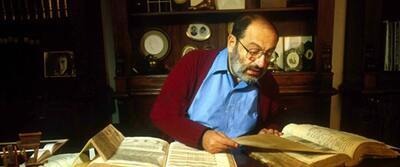
This lively and engaging documentary could just as well be titled “The Labyrinths of Umberto Eco.” The Italian scholar, essayist, novelist, lecturer, and polymath, who died in 2016 at the age of 84, owned not just a prodigious number of books, many of them antiquarian oddities; he absorbed over his lifetime a repository of knowledge that led down many corridors and around corners and snaky paths, allowing him to make astonishing and sometimes disquieting cultural connections. What he did was called semiotics—and the practice is just as crucial to his popular fictions The Name of the Rose and Foucault’s Pendulum as it is in his academic work. Very often, the result of his enthusiastic investigations demonstrated the truth of the Biblical adage about there being no new thing under the sun. 

So you think Vladimir Nabokov’s novel Pale Fire, a “fake” poem followed by an addled “annotation” that adds up to a sardonic yet tragic narrative, is some kind of triumph of modernism? Well, yeah, it is, but in Eco’s collection, there’s an 18th-century book by Thémiseul de Saint-Hyacinthe called The Masterpiece of an Unknown, which is a long mock-commentary on a nonsense verse, written about by Eco in his book La Memoria Vegetal, which I think has yet to be fully translated into English, which is a shame. 

The movie, directed by Davide Ferrario, combines archival interview footage of the ever-lively Eco, contemporary scenes of his family and friendly scholars poring over his incredible volumes and their often macabre illustrations, and readings of Eco’s work by actors. These latter moments are sometimes staged in a style that gets a little cute (complete with animation that gets a little cute), but they convey, to some extent, the breadth of Eco’s thought. These components are pillowed by beautiful shots of notable libraries the world over, one so futuristic in design that I doubted it was real, but the end credits confirm it is. There’s not much Eco Origin Story here; he tells a funny story about how as a student, he entered an arrangement with a theater manager to see plays cheap or free if he and his friends applauded rousingly enough, then recalls that he always had to leave before the last act, so he spent many years, for instance, not knowing “what happened to Oedipus.”

While the twists and turns of Eco’s mind, and his delight in what are called “fake books,” have a mind-blowing force to them, Eco himself is not blind to how manufactured knowledge can harm or kill. He calls our own brain the source of “organic memory.” Books, physical books, are vegetal memory. The silicon chips in our phones and computers represent mineral memory. A great memory isn’t always a good thing. Eco cites one of his (and everybody’s, really) favorite writers, Jorge Luis Borges, whose short story Funes, The Memorious is about a man who remembers everything. “And is an idiot,” Eco bluntly states. A good memory is a selective one. Hence, according to Eco, the Internet is “the encyclopedia, according to Funes.” 

Later, he muses that it is only in fiction that we encounter irrefutable truths. To this day, some people insist that the world is flat, and yet, Eco wryly notes, nobody questions that Clark Kent is secretly Superman. After the screening of the movie, I found Eco’s pronouncement borne out as I lunched at a well-known West Village pizza joint. Some guy came in with his kids and said loudly, “This is where Spider-Man works,” for indeed, the joint, albeit at a slightly different location, is where Tobey Maguire has a delivery job in the first Sam Raimi Spider-Man picture. 

Because this documentary intends to celebrate Eco’s life, work, and books, it doesn’t follow through on the darker currents that the work uncovered. It’s funny when Eco compares himself to The Da Vinci Code author Dan Brown and says, “He and I read the same books; only he believed them.” It’s not so funny when Eco speaks of the anti-Semitic forgery of The Protocols of the Elders of Zion. For as much as Eco saw how the written word could elasticize reality, he invariably spoke up for that reality while delighting in some ways that literature could distort and codify it. His theorizing on whether Sir Francis Bacon wrote Shakespeare’s works is a hilarious debunking that some souls might not actually see as a debunking. The best way to explore Eco’s world is via his actual body of work, and this picture made me want to revisit some of his literary labyrinths immediately. 

Now playing in theaters. 

Nimona 0

Nimona

A few compelling emotions and themes are suggested but rarely well expressed in “Nimona,” a sometimes cute but mostly hyper and overextended animated sci-fi fantasy about the title teenage shapeshifter and her disillusioned (and very literal) knight in shining armor. Overstuffed with Pinterest-ready details and set in the distant future, “Nimona” follows the unlikely duo of the title character (Chloe Grace Moretz), a bubbly, post-manic pixie dream girl, and Ballister Boldheart (Riz Ahmed), a disgraced “medieval”-style knight of some unnamed realm who must defend himself after he’s framed for murdering Queen Valerin (Lorraine Toussaint). 

“Nimona” feels more like a dramatized checklist of stylistic tics and emotional beats from both Pixar and Dreamworks’ animation studios’ greatest hits. There’s some lightly likable dad-friendly puns, sight gags, and a bunch of angsty declaiming about questioning authority, being true to yourself, and other bumper-stick-ready slogans. 

“Nimona” also features a bunch of post-post-punk anthems and punk-adjacent music of variable quality, including at least one Metric song (“Gold Guns Girls”) and some guitar riffs by ex-Sex Pistol Steve Jones. The characters, whose designs were partly modeled after the styles of the formative Disney background artist Eyvind Earle and the “minimal realist” illustrator Charley Harper, fly around the screen with enough keenly observed, fluid grace to remind you that many passionate animators made and put serious thought into the making of this movie. Unfortunately, several of the main characters’ facial expressions seem more like dutiful mimicry—“Nimona” was based on ND Stevenson’s graphic novel—than a convincing vehicle for the characters’ emotions. Their hearts are in the right place, but their mouths—and doe eyes, and glass-cutting jawlines—just pay lip service.

Case in point: While Nimona obviously matters to the plot and exhaustively detailed themes, she’s eventually prescribed with the sort of backstory that even Nimona, in an early scene, scoffs at. She laughs at Ballister’s paternal concern and also shields herself from easy typecasting by waving away his “small-minded questions.” The why of Nimona doesn’t matter, she says, but she eventually provides an origin story later on, which ostensibly endears her to us even more. She’s not a monster, as Ballister fearfully assumes, but a well-meaning misfit. Nimona is also the only friend that Ballister has after the hilt of his sword mysteriously fires a laser at the Queen and instantly kills her. 

You might have questions about that abrupt and surprisingly dark plot twist, but not much about “Nimona” is developed beyond precisely enunciated dialogue and well-designed animation. This isn’t a bad movie in the sense that it’s poorly made. But it often leaves something to be desired whenever the characters talk or muscle their way past the details that might make you want to root for Ballister and his proudly irreverent sidekick. For example, he’s got a concerned but fearful partner, Ambrosius Goldenloin (Eugene Lee Yang), a fellow knight who’s also different than Ballister in that he’s a descendant of the mythic hero Gloreth. Ballister, by contrast, is a commoner, which briefly makes him look like an underdog.

Ambrosius overcomes his wayward sense of duty as he chases after and inevitably tries to protect Ballister from the imperious Director (Frances Conroy), the kingdom’s snobby officiating protector. But why is Ambrosius, the kingdom’s favorite presumed favorite, not more hung up on Ballister’s relatively low upbringing? In other words, why is a movie so clearly trying to be about indoctrination—ignore your programming and trust your inner monster!—only so interested in its characters’ feelings? 

Nimona should, in theory, synthesize the movie’s two modes—leaden speeches and light-hearted chases—but doesn’t get to do much beyond defend her right to exist. Her in-your-face character will seem bubbly and spunky to some; others might find her a well-crafted but empty collection of third-hand quirks. She has all the right moves, as when she shape-shifts into various animals and repeatedly saves Ballister from capture and punishment. But when she talks, she sounds more like a tough-talking authorial sock puppet than a righteous adolescent. 

It’s hard to take a movie like “Nimona” seriously when it often tries to have it all ways. Moretz’s performance injects some appreciable irreverence into the movie’s stuffy anti-authority narrative, but Nimona’s creators go too far out of their way to applaud viewers for knowing that we’re watching a fractured fairy tale with rules that were made to be tweaked. Sounds great, but wouldn’t you rather watch a movie that’s more than a proof-of-concept showcase for its sometimes charming but mostly loud counterprogramming? Nimona is too calculating and savvy to be credible during her big heart-on-her-sleeve moments. She’s not a character; she’s whatever the scene needs her to be. Clever, sassy, goofy, wounded: “Nimona” is a big mood board.

On Netflix now.

Prisoner’s Daughter 0

Prisoner’s Daughter

When Max (Brian Cox) is released from prison early due to good behavior (and pancreatic cancer), he has nowhere to go. He still has contacts from his former life as a “heavy” in the Las Vegas underworld, but he has no desire to get back into all that. What he wants to do with the months he has left is reconnect with his daughter Maxine (Kate Beckinsale). Unfortunately, she wants nothing to do with him. She is the struggling single mom of son Ezra (Christopher Convery), piecing together random jobs so she can pay for Ezra’s epilepsy medication. Maxine doesn’t have the bandwidth for some delayed affectionate reunion with her father, who let her down in many ways. But she caves. Max moves in with Maxine and Ezra. “Prisoner’s Daughter,” directed by the talented Catherine Hardwicke, details the chaos and catharsis of what comes next.

With a script by Mark Bacci, “Prisoner’s Daughter” unfolds on fairly predictable lines: the slow melting of Maxine towards her father, the bond formed between grandfather and grandson, etc., and Brian Cox and Kate Beckinsale fill their thinly-drawn characters with backstory and fleshed-out complicated emotions. Every scene is loaded with baggage from the past. Ezra, bullied at school for his seizures, needs a father figure since his own dad is a drug-addicted loser named Tyler (Tyson Ritter), who plays in a “band” and lives in what he calls “an artists’ co-op” (really just a drug lair). Ezra wants to see his dad more. Tyler demands to be a part of his son’s life. Maxine knows the dangers and is willing to be the “bad guy,” refusing Tyler access. Max, ensconced in the small house, tries to intervene. Sometimes this goes well, other times, not so well.

Good scripts make you forget they are scripts. The script for “Prisoner’s Daughter” is quite talky and never takes wing. You can almost see the words on the page, despite the strong efforts of Beckinsale and Cox. Young Convery (very good in a similar role in “Pinball: The Man Who Saved the Game“) doesn’t fare as well. While Ezra is what you’d call “precocious,” his dialogue tilts into cutesy and sounds like it was written by someone who doesn’t know kids. The self-aware wisecracks grate, as does the calm ability to initiate difficult emotional conversations with adults, using therapeutic-speak, like a sit-com kid, circa 1987. It’s hard to get past this problem. If dialogue doesn’t sound real, nothing else has a chance to lift off. The film is betrayed by its final sequence, where Max takes matters into his own hands, a plot development from a different type of movie altogether. And so what could have been character-driven is plot-driven after all. “Prisoner’s Daughter” deflates.

If you only saw Las Vegas in film, you’d think it was solely made up of the neon strip and populated by gangsters, high-rollers, and showgirls. But Las Vegas is, of course, a place where normal people live. Similar to Alexander Payne’s “The Descendants,” taking place in a Hawaii rarely shown in film, “Prisoner’s Daughter” evokes Las Vegas in all its desert beauty and squalor (the “artists’ co-op” is the grungy stuff of nightmares). Maxine refers to her little house as a “dump,” but it has a backyard, and an unfinished garage, and she’s done her best to make it homey despite her limited means. 

The film’s best moment is a small one where Maxine is offered a job in a corporate laundromat. The awestruck look on Beckinsale’s face when “health insurance” is mentioned during the job interview is piercing and eloquent. Emotion doesn’t have to be conveyed with words. The moment is an indictment of the entire stinking system, where the ability to pay for your son’s crucial medication is tied to employment. It’s inhumane.

In “Lords of Dogtown,” Catherine Hardwicke did a very difficult thing: she captured the vibe of a specific scene. Subcultures are sometimes impenetrable to outsiders, and skateboarding/surfing in ’70s California was a real vibe, and Hardwicke nailed it. Hardwicke’s first film was “Thirteen,” a frightening look at two newly-teenage girls, hungry for experiences far beyond their years. Hardwicke approached the material with fearless intimacy. She also helmed the vibe-iest film of the 2000s, “Twilight,” with moody teenage love unfolding in the chilly light of the Pacific Northwest. “Twilight” is the best of the franchise, made fun of by those who pooh-pooh films championed by teenage girls. Meanwhile, teenage girls are cultural weathervanes, and Hardwicke caught that spirit. Teenage girls often spot things first and point the way. Hardwicke reveled in the spectacle of gloomy Kristen Stewart and glittery Robert Pattinson. She understood the subtext. These three films make up an extremely strong start.

“Prisoner’s Daughter” is tepid by comparison, but Hardwicke does her best to embed herself in the story, trying to catch the vibe. However, there is no vibe. She tries to create something that isn’t there to begin with. This is the job of any talented director, particularly with a script as clunky as this one. Hardwicke has a good eye, a good ear, and a sensitive feel for atmosphere. Hopefully her next project will give her the space to show what she can actually do.

Now playing in theaters. 

The Passengers of the Night 0

The Passengers of the Night

Dramatic occurrences crop up throughout “The Passengers of the Night”: a separation, a near-overdose, a workplace affair, a loss of virginity.

But director and co-writer Mikhaël Hers is just as interested in the rhythms of everyday life in 1980s Paris that provide the connective tissue between these events: kids riding bikes, a quiet conversation on a park bench, sneaking into a movie matinee, the Eiffel Tower in the pastel hues of dawn.

At the center of this low-key hang is Charlotte Gainsbourg as the newly single Elisabeth, effortlessly chic as always. She’s the middle-aged mother of two teenagers, and she’s searching for purpose and identity after her husband leaves her. Gainsbourg has long made herself vulnerable for the camera in her many film roles, but here she shows a tender fragility that steadily evolves into a warm, earthy confidence and even an unexpected sense of joy. It’s a lovely performance.

“The Passengers of the Night” takes place from 1981—with jubilation in the streets over the election of President François Mitterrand—through 1988. But a constant throughout the movie’s many life changes is the presence of the late-night radio show that gives the film its title. During the wee hours, people call in to share intimate, personal stories with the veteran star Emmanuelle Béart, formidable as ever, playing the host, Vanda.

Hers and cinematographer Sébastien Buchmann indicate Elisabeth’s loneliness —and the way the radio show gets her through the night—by framing her in silhouette, standing before the expansive windows of her high-rise, corner apartment, gazing at the city’s lights. It’s a gauzy but arresting image. So taken is she with Vanda’s program that she shows up at the station in the middle of the night and quickly accepts a low-paying job running the switchboard. You can feel how significant this human connection is; similarly, she’ll find contentedness years later with a daytime job at the library. Helping others becomes a calling, and watching her subtly blossom is a real pleasure. Is she exhausted from working double duty with weird hours? This film can’t be bothered with such realistic troubles.

The ease with which Elisabeth finds this job suggests early on how little interest Hers and co-writers Maud Ameline and Mariette Désert have in exploring conflict. Instead, they show us characters talking about books and films, listening to records, and smoking—always smoking. It is SO French. The younger of her two kids, 10th-grader Matthias (Quito Rayon Richter), wants to be a poet; her older sister Judith (Megan Northam) is a political activist. Everything is cool; there’s never any parental judgment or interference.

Even the film’s one potential source of tension or danger—Elisabeth’s invitation to a young vagabond to stay with the family for a little while—turns out to be a pleasant addition. Eighteen-year-old Talulah (Noée Abita) came into the radio station to tell her story of dropping out of school and living on the streets of Paris. Maybe it’s the mom in her, or maybe she relates to this sweet creature with her big, brown eyes and birdlike demeanor, but Elisabeth feels enough of an instant connection with this stranger to take her into her spare bedroom upstairs. Abita has a beguiling presence, reminiscent of a “Gia”-era Angelina Jolie. But even Talulah’s warning to Matthias not to fall in love with her—“I’m not a girl for you,” she says before beginning an ill-advised but inevitable fling with him—doesn’t result in the kind of melodrama most films would include.

Allowing us to luxuriate within the languid pacing of this slice-of-life story is actually refreshing during these big, noisy summer days. The period-specific production and costume design are spot on and give the film a lived-in feel (Gainsbourg wears many belted, cowl-neck sweaters, but nothing ever feels like a flashy ‘80s parody). Hers includes various pieces of archival footage from the era to give a feel for what Paris was like back then and even includes home movie-style images of these characters in the same boxy aspect ratio, a nice touch that enhances the feeling we’re watching a time capsule. And seeing Elisabeth find her voice within this realm—literally and metaphorically—is an understated delight. 

Now playing in theaters. 

Ruby Gillman, Teenage Kraken 0

Ruby Gillman, Teenage Kraken

“Ruby Gillman, Teenage Kraken” is a cheerful, colorful animated film about a shy, academically gifted young girl with a protective mother and devoted friends who transforms into a huge creature as a metaphor for adolescence, with multi-generational conflicts. Yes, it is similar to the terrific “Turning Red,” but this story has its own delights. One of the best family films of the year, “Ruby Gillman, Teenage Kraken” has humor and heart, buoyant energy, witty and imaginative visuals, and never-less-than brilliant voice talent.  

Ruby (Lana Condor) and her family live in a coastal village called Oceanside. Her mother, Agatha (Toni Collette), is a successful realtor, her father, Arthur (Colman Domingo), runs a gift shop, and she has an energetic little brother Sam (Blue Chapman). Ruby does not look like the other kids at school. She’s blue. And where a human’s hair should be, she has something fishy. Agatha tells her to explain that the family is from Canada, which seems to satisfy everyone. Her mother also cautions that she can never go in the water or even on a boat. That puts a lot of limits on her social life in a beach-centric town. 

Ruby has a crush on Connor (Jaboukie Young-White), a boy she’s tutoring in math, but she cannot find the nerve to invite him to the prom. When he falls into the ocean, though, she impulsively jumps in to rescue him. And then, well, you saw the title. Her transformation leads to connections to relatives on her mother’s side of the family she never knew existed, including Uncle Brill (the always-delightful Sam Richardson) and a deliciously imperious grandmother Kraken queen (voiced by Jane Fonda) known as Grandmamah (emphasis on the third syllable, please). 

At first, Ruby is shocked and embarrassed by her Kraken-hood. But thanks to Grandmamah’s encouragement, and a new bestie classmate, Ruby sees how her new abilities have the potential for doing good. The new friend is the instantly popular new girl at school, Chelsea Van Der Zee (Annie Murphy of “Schitt’s Creek”). They have something in common. They are both sea creatures; Chelsea is a mermaid. Grandmamah has told Ruby about the war between the Kraken and the mermaids, but Ruby thinks her friendship with Chelsea could lead to a new era of peace and unity. 

The film’s settings are beautiful, with charming seaside buildings and an ocean environment so marvelously tactile we can almost smell the sea spray. The movements underwater, whether peaceful or turbulent, are vivid and realistic. The high school environment is funny and evocative, with the prom variously described as “a post-colonial patriarchy construct” and “a hormone-fueled benchmark of adolescence.” And there are very funny jokes about topics not often the subjects for humor: escrow and ASMR. 

The film’s characters are endearing and expressive, with thoughtful, vivid detail (Connor’s hair is a wonder), all voiced with warmth and spirit. Ruby’s human legs have a slight rubbery elasticity suitable for a gawky teenager. As a Kraken with glowing suckers on her tentacles, her personality still shines through. Chelsea’s glorious red hair is a bit of a wink to Disney’s Ariel but also a signifier that this supremely confident high school alpha girl seems to have it all together while everyone else is just trying not to do anything too humiliating. Fonda is clearly having a blast as the Queen of the Oceans; she’s supremely magisterial, a warrior at heart, but also a doting grandmother delighted to teach the newest heir to the Kraken legacy about her new world and her new powers. I got a particular kick out of Richardson’s Brill, the goofy but affectionate and always-on-your-side uncle everyone deserves. And watching Condor’s Ruby go from being ashamed and terrified to being proud of her authentic self should help us all wonder what more we are capable of. 

Now playing in theaters. 

Run Rabbit Run 0

Run Rabbit Run

The topic of motherhood has long provided the horror genre with some of its greatest stories. From “Rosemary’s Baby” to “The Babadook,” there is something inherently scary about watching your beloved child be overtaken by evil forces or reckoning with the idea that becoming a parent makes us vulnerable to just about every terrible thing in our world (and beyond). In Daina Reid’s new film “Run Rabbit Run,” fertility doctor Sarah (Sarah Snook) meets these tensions head-on when her precocious seven-year-old daughter Mia (Lily LaTorre) begins to claim she’s actually Alice, Sarah’s sister who disappeared when she was Mia’s age. 

Reid’s ghost story uses innocuous objects to layer on the film’s sense of unease. First, Mia shows up with a white fluffy rabbit, and she quickly becomes obsessed with it, to the point where she begins wearing a self-made pink rabbit mask. The bunny, which she names Rabbit, ominously hops around the house, a harbinger of the bad things still to come. When Sarah tries to get rid of Rabbit, it bites her, the first of many injuries she will incur as she spirals over memories of her missing sister, her estranged mother, and recently departed father. The film’s conflict is centered between mother Sarah and daughter Mia, but it also includes a thorny relationship with Sarah’s mother, Joan (Greta Scacchi), creating a cycle of guilt from childhood sins and feeling like she’s not doing enough for her kid. 

Rabbit is not the only troubling thing in Hannah Kent’s script. In setting up Sarah’s narrative, Kent shows the audience how much Sarah’s been pushed to the brink even before anything unexplained begins. She’s divorced and co-parenting with her ex-husband, Pete (Damon Herriman), who has moved on and in the process of starting a new family of his own. Sarah is also dealing with the death of her dad, his things still piled up in her garage yet to be sorted through. And then there’s her mother, an ominous figure also losing her memories to dementia. When Mia’s problems escalate, she at first tries to be the strong parent doing what’s right for her child, but then, she starts to hurt herself in the process, and by extension, hurts Mia. 

In a marvelous departure from her best-known role as Shiv Roy in “Succession,” Snook brings a motherly sense of care and duty to her character. She’s attentive and affectionate in ways many of us haven’t seen her. Her calm, collected demeanor quickly erodes in the face of so much uncertainty and stress. Snook’s attention and care for LaTorre’s Mia is deeply felt, and their bond is evident from the first scene when mother wakes up her daughter with a birthday gift. LaTorre looks at Snook with large expressive eyes that shift from confused and scared when she’s inexplicably bleeding to burning with rage when she screams that she’s actually Alice. But in moments of Mia’s clarity, LaTorre runs to Snook and embraces her tightly for safety, establishing the close relationship between the pair early on; giving us a sense of what will be lost once Rabbit enters the frame.  

Sarah’s descent to madness mirrors the haunting landscape of the film’s setting in Waikerie, Australia.  There ate windswept horizons, imposing cliffs, stormy clouds over luscious green hills, flutters of birds flying in droves by her old home, and what looks like trees sprouting out of a purple river. The film wallows in a weatherbeaten palette, with lots of pale yellows and dusty grays, in the daytime. At night, darkness takes over, and even well-lit homes and cozy bedrooms start to feel unsafe. Cinematographer Bonnie Elliot carefully plays with these moods to create a visual sense of Sarah’s spiral. The film’s aesthetic becomes increasingly erratic as she loses her grip on reality. When Sarah goes in and out of a dreamlike state, images may look hazy or disorienting in their closeup, then harshly come into focus when she returns to reality. When Sarah starts to lose control, Snook physically takes her character to that dark place, but the film’s camera immerses the viewer in her unease. 

Motherhood, like extreme moments of grief, can be among the most life-changing experiences – a clear demarcation of life before and after the event. Sometimes, it can also be coupled with extreme feelings of isolation, which in this horror movie, makes a person vulnerable to the ghosts of their past. “Run Rabbit Run” is a solid spooky tale without anything too flashy like a Babadook to haunt our dreams and memes but chilling enough to make us sit up in our chair and scan the screen for the next sign of danger. While a fluffy white rabbit may be a symbol of innocence, it leads Sarah down a nightmarish version of “Alice in Wonderland.” The mothers in this film are haunted by the mistakes they made. Joan never seemed to have recovered from Alice’s disappearance, and Sarah’s barely buried trauma resurfaces her own feelings of regret over failing her daughter. And once Sarah is through the looking glass, are she and Mia safe? Are any of us?

On Netflix now.

Anthem 0

Anthem

America is often ridiculed internationally for its affinity for the flag. A symbol of patriotism hung outside of homes, worn on shirts, pasted on bumper stickers, etc., the flag is an omnipresent force in the visual fabric of America. Yet what has garnered quite a bit of controversy over the past few years is another similarly revered symbol: the anthem, alongside its cultural rejection. Whether it’s kneeling as it plays or refusing to sing along, the simplest of actions are powerful displays of opposition and touchy subjects for the country’s most loyal “patriots.”

Of course, this disillusion is rooted in the systemic oppression of anyone outside the majority. Produced by Ryan Coogler, director Peter Nicks’ documentary “Anthem” follows composer Kris Bowers (“Brigerton,” “Green Book”) and producer D.J. Dahi (“Self Care” by Mac Miller, “Money Trees” by Kendrick Lamar) as they trek across America, looking to reinvent the anthem. 

The documentary takes the format of a road film as Dahi and Bowers travel to American genre-centers like Nashville, Detroit, and the Bay Area, meeting with musicians and discussing their love for the art form. All of these individuals perform, as well as relay the histories, importance, and qualities of their genres. Across all groups, the sentiment is the same: music is love, music brings people together, and the anthem doesn’t truly accomplish either. 

As they travel the country interviewing a breadth of artists, every interaction is marked by a bothersome sense of artifice. There’s a lack of genuine chemistry within the conversations, and it feels more like checking boxes than thoughtfully engaging with the subjects. Dahi and Bowers lack chemistry and rapport as well, feeling like two talented students stuck together for a group project. 

The camera is always strongly felt by the people in front of the lens and it leads to a rigidity that takes the emotion out of the sentiment. It renders these conversations as educational spiels instead of empathetic discussion. The value of what is being said is undeniable, but in a documentary that’s thesis is rooted in empathy and unity, there’s a counterintuitive emotional distance between the subjects that translates even further through the screen.

“Anthem’s” format is equally formulaic. Dahi and Bowers drive to a city, listen to their subjects play, and then interview them. This repeats itself throughout the entirety of the documentary, and while it works to get all the information outlined, it’s fatiguing. Perhaps these downfalls are a result of the film’s ambition, tracking a transnational exploration of music, interviewing figures in the community, and crafting a song to end it all. It’s a lot of information to crush into 98 minutes, and while a longer documentary was a feasible solution, the lack of communion between the subjects is a trickier fix.

However, what is most fascinating about “Anthem” is its investigation into the legacy of “The Star-Spangled Banner,” and the hypocrisy that has followed it from its origin. Francis Scott Key wrote the American anthem to the tune of a British song, cementing an off-the-bat philosophical complication that only continues to prove itself in terms of representative problems today.

The project of “Anthem” is special and compelling, but the documentary lets itself down. There is a notable neglect to include much of the musical process. We meet gospel singers, country singers, Native singers, jazz singers, etc., but we are hardly privy to how Dahi and Bowers actually compose the song to include these genres. The conversations between the artists across the country are shown as they write the lyrics and discuss the issue of a hopeful v. critical tone, but the music itself feels forgotten. 

There’s a wonderful analogy when Dahi and Bowers visit Detroit, where the jazz musicians reveal the key to their performance. Jazz is a conversation with all the players, they must work together, listen, and know when to play and when to let another player shine. It’s the documentary’s whole philosophy, and while it works on paper, the execution teeters on connecting its feeling to its format. 

“Anthem” is a love letter to the art form, as well as the diversity in the country where many of these genres originated, but it fails to fully realize itself. The American fight is one that rears itself against racism and stuck-in-the-mud traditionalism. Naturally, the symbols of these forces are just as hard to change as the minds themselves. “Anthem” takes on this daunting task, making a concerted effort to display the beauty of culture in the United States, and music’s intrinsic tie. Yet while acknowledging the importance of its thesis, it doesn’t fulfill the full empathy required to inspire.

On Hulu today.

Rock Hudson: All That Heaven Allowed 0

Rock Hudson: All That Heaven Allowed

Due to his high profile death from AIDS early in the crisis and its galvanizing effect on the movement, Rock Hudson is arguably more known now as an icon of LGBTQ history, then for the films in which he starred. That is certainly the point of view of Stephen Kijak’s latest documentary “Rock Hudson: All That Heaven Allowed,” which richly explores his personal life while taking a cursory look at his filmography.

This is true to the doc’s source material, Mark Griffin’s 2019 biography Rock Hudson: All That Heaven Allows, which weaves the history of Hudson living as a closeted gay man in midcentury America within the framework of his most popular films. Viewers looking for an in-depth history of his diverse work as an actor will likely leave disappointed, though they will learn a lot about Hudson’s personal life and conflicted interiority.

The doc begins with a story told by Hudson to a fellow aspiring closest gay actor about a dream he had in which he were the center of a sparkling diamond. This dream supposedly was the anchor to which Hudson clung throughout his tumultuous career in Hollywood. It’s through this frame the filmmakers posit that much of his choices in life – including his reluctance to come out even post-Stonewall – stemmed from his desire to achieve and maintain this stardom.

Using a plethora of archival video and photography, Kijak plots the life of Hudson—born Roy Harold Scherer Jr.—from his childhood in Illinois to his stint in the Navy during WWII to his early days and later ascent in Hollywood. Kijack pays special attention to Hudson’s relationship with agent Henry Willson, who created the name and the star persona that fans knew as Rock Hudson. 

The filmmakers do not shy away from the lilac and lavender aspects of old Hollywood, exploring the various ways queer stars hid their personal lives and fought to keep their names out of tabloids like Confidential. This includes an in depth look at Hudson’s brief arranged marriage to Wilson’s secretary Phyllis Gates and the damage it caused to both parties. 

All of this is rich and thorough. However, the formatting of the documentary remains curiously uneven. For the first 45 minutes or so, Kijack uses solely voiceover from various interview subjects, some new recordings and some archival, who either knew Hudson personally or have insightful commentary on his life and career. However, the last hour of the film shifts to on-camera interviews with various living people, some of whom were part of Hudson’s inner circle like “Tales of the City” writer Armistead Maupin and Hudson’s ex-boyfriend Lee Garlington, and a particularly touching interview with his “Dynasty” co-star Linda Evans who discusses their controversial kiss on the show.

While the shift in format is certainly do to the availability of these subjects and their proximity to Hudson during his lifetime—the private photographs supplied by Garlington of the two on vacation together will surely tug at your heartstrings—the execution of this shift is creaky and would have have felt less abrupt had the filmmakers chosen to weave these on camera interviews from the beginning. 

The film also heavily relies on the editing format from the excellent 1992 experimental essay “Rock Hudson’s Home Movies” in which filmmaker Mark Rappaport uses footage from Hudson’s films—out of context—in order to cheekily make gay entendres and nod to queer readings of his films when watched with the knowledge of Hudson’s orientation, whether they’re actually there or not. While Rappaport’s use of this technique was playful and subversive, the way it’s employed by Kijack is often far too on the nose and rings hollow.

One aspect of this documentary that does shine as bright as Hudson himself is the way it highlights the deep friendships he had with his co-stars Elizabeth Taylor and Doris Day, and their steadfast support of him after his diagnosis. Aside from some enlightening excerpts from his close friend George Nader’s diary, much of the documentary’s look at the cover up and then impact of Hudson’s diagnosis of AIDS often comes across like a Wikipedia entry, but its use of archival footage of both women, and especially a fiery speech made by Taylor, brings a much-needed personal touch to this sequence.

Kijack smartly ends this section on a bittersweet note. AIDS activist Bill Misenhimer states “it’s hard to say he saved anyone because no one was saved. Everybody died,” but noted that Hudson’s announcement of his diagnosis “gave people hope.” Each living member of Hudson’s inner circle also shares how many friends they lost, with one friend recalling “all we did was go to funerals and fundraisers” and another stating how it inspired him to get tested. Kijack then contrasts audio of a reporter revealing that funding for AIDS research skyrocketed in the year after Hudson’s death with chilling footage of the AIDS Memorial Quilt being laid on the Mall in Washington, D.C. 

Kijack does not end the doc on this bleak note, rather allowing a ray of hope to shine through via one of Hudson’s final interviews in which he shares he’s not afraid of anything anymore. It is this quiet strength “Rock Hudson: All That Heaven Allowed” aims to project, and although the documentary has structural issues, it is this strength that will likely inspire those who may not know Hudson’s work to seek it out, and remind a new generation that, despite seemingly insurmountable difficulties, it was possible for some of our queer forebears to find a little slice of happiness, despite living in a world that told them they were not welcome. 

On Max today.

Hijack 0

Hijack

Just enough of Apple TV’s latest high-profile thriller works to recommend it, even if it never quite achieves the heights it should with its premise and captivating leading man. Idris Elba has had a fascinating career in that he has the screen charisma to be a movie star, and yet his most popular roles remain on the small screen (“The Wire,” “Luther”). Here, despite the presence of some strong supporting performers, he uses every bit of that magnetism in a way that almost becomes a detriment to the project in that it loses altitude a bit whenever he’s not centered. I walked away from “Hijack” thinking that Elba could easily carry an action show like “24”—an obvious inspiration for this real-time thriller—but that I’d rather see him kicking ass on the big screen in a “John Wick”-esque franchise instead. That I began to unpack the career of the star over the seven chapters of “Hijack” is a bit telling regarding the quality of the thrills here in a show that’s consistently interesting but never quite as engaging as it should be, largely because of how many characters it tries to bring onto this overbooked flight.

Written by George Kay (the recent Netflix adaptation of “Lupin”) and directed by Jim Field Smith (“Butter”), “Hijack” opens with the final passengers boarding a 7-hour flight from Dubai to London. One of those last people on board is Sam Nelson (Elba), who exchanges a few texts with his ex-partner that makes it clear that things are a bit rocky on the home front. She even tries to encourage him not to come to London. He ignores that instruction and ends up on a flight from Hell when the journey is overtaken by five hijackers. Led by a stoic gent named Stuart (an excellent Neil Maskell), the hijackers seem to have a highly coordinated plan, including a way to emotionally manipulate their way into the cockpit, although Kay has a habit of parsing out information in a frustrating manner. For several episodes, it’s not even clear what the hijackers’ intentions are or what they hope to accomplish (a folder named “Demands” appears more than halfway through the series), which could theoretically add tension by making us feel like confused passengers on the plane, but the show so consistently leaves the vessel that it just starts to feel like a cheap trick.

Instead of locking us in our seats with Sam and the rest of the kidnapped passengers, “Hijack” jumps to the U.K. to also include the people who will try and stop a tragedy from the ground. The great “Torchwood” star Eve Myles plays Alice Sinclair, one of the air traffic controllers who first understands the severity of what is happening on the flight. Myles give a smart no-nonsense performance, often the voice of reason that elucidates the stakes of each escalating situation—usually that the logical thing to do would be to shoot the plane out of the sky. Much of “Hijack” consists of Sam trying to lower the stakes of the hijacking so that doesn’t happen, which makes for some of the most interesting writing and performing by Elba. If the British government—or the Hungarian one they’re flying over—suspect that they could have another 9/11 on their hands, they won’t hesitate to kill everyone on board. Elba conveys how much his character’s background as a business negotiator makes him aware that he may have to give into his tormentors at times just to keep everyone calm.

Sam and Alice aren’t the only ones on edge as the Home Secretary and other British power players debate what to do with an uncontrolled plane headed for one of the biggest cities in the world. These scenes are admirable on a political level, but they ultimately serve as a detriment to “Hijack” by reducing tension every time we leave the plane. Similarly, Neil Maskell is solid as a cop who become deeply involved in the case to a connection he already has with Sam, but his arc too serves to clutter more than anything else. “Hijack” undeniably works best when it’s Elba vs. Maskell, and I wished for more juicy scenes between the two actors instead of subplots about what was happening on the ground.

Still, “Hijack” builds to an impressive final chapter, an episode that really allows Elba to use all of his skills to try and save the day. He understands that sheer force won’t stop a hijacking, turning Sam into a negotiator more than an action hero. And yet even the final episode goes on a few scenes too long in a way that stretches disbelief. Everything that works about “Hijack” has a bit of fat around it that should have been cut away. And I’m not really sure any of it would have worked without Elba, sitting in the seat of his career, unsure where he’s going to land.

Whole series screened for review. Starts on Apple TV+ on June 28th, with episodes dropping weekly.

God Is a Bullet 0

God Is a Bullet

“God Is a Bullet” is like a mallet to the back of the head. It’s never subtle, demanding that you know its presence while knocking the taste out of your mouth (none of this, unfortunately, can be counted as a compliment). The film attempts to marry the movements common to grisly road movies and grimy action thrillers while aiming to shake the religious fiber of its morally upright protagonist, Bob Hightower (Nikolaj Coster-Waldau), a local sheriff’s deputy searching for his kidnapped daughter, Gabi (Chloe Guy). There are, to be sure, moments of shock. But they offer very little awe. 

The opening is a broken canvas of dispersed events: In one instance, a girl with a pink balloon, awaiting her mother outside a supermarket, is snatched by a group of Satanists in a black van. She will grow into Case (Maika Monroe), a blond, tattooed, heroin-addled acolyte of cult leader Cyrus (Karl Glusman). We then jump to some unknowable time after, during Christmas, where, in a ghastly scene akin to “A Clockwork Orange,” this same cadre of goons rape and murder Hightower’s ex-wife, kill her husband, and flee with his daughter. Every shot from a double-barrel shotgun that sends Hightower’s ex-wife’s limp body thudding into a pool is more garish than the last and is equally as incomprehensible in its tenor as the tawdry plot of the movie. 

The first few minutes, a hopeless, slap-dash attempt to transport viewers to the heart of this gruesome movie, signal a strained desire by writer/director Nick Cassavetes to pull tension from the collision of crushing realism and a knowing formalism. 

The film’s discordant tones begin when the naive Bob recruits the worldly Case—she recently left the group and is presently in rehab—to track Cyrus’ gang. They hit the road in a pickup truck with a cache of guns, arriving at a desert house belonging to the Ferryman (Jamie Foxx), a tattoo artist with an amputated hand and the kind of white splotches on his face common to those with vitiligo. The makeup used for Foxx simply looks crummy. The same goes for the tattoos on all the characters, which are so blackened and well-defined you’re left wondering if these marauders get touched up every couple of months. Those are some smaller swings for authenticity that ultimately feel like glaring affections.

To a point, Cassavetes wants you to know you’re watching a movie. He inserts explicit photography featuring bloody Satanic sacrifices, which remind viewers that the film is adapted from Boston Teran’s same-title book but not based on true events. He and editor Bella Erikson also slow fight scenes, tinged by Mozart, to break the spell of this naturalistic road movie. Over-the-top but committed performances by Glusman, for instance, and a host of gang members, also push the boundaries of belief. 

You can nearly sense how “God Is a Bullet” could be an intriguing study of religious faith amid an unspeakably terrible world. But Cassavetes’ distended script interrupts the rhythm and pace of his storytelling. There’s an entire subplot involving January Jones as the trophy wife of the town’s sheriff (Paul Johansson) that could be entirely excised, and you wouldn’t miss a thing. The backgrounding of Cyrus also begs to be trimmed.

In trying to intertwine the visual feel of “The Girl with the Dragon Tattoo” and the first season of “True Detective,” the film loses focus. Its violence against women, while certainly an intended critique of this barren, apathetic desert landscape, succumbs to gratuitousness. Cassavetes’ artsy sheen doesn’t help matters either. Instead, the operatic, final confrontation between Bob, Case, and Cyrus is brutalist miserablism disguised as elevated style.     

The only standout figure among the bunch is Monroe, playing Case. The actress previously stunned in Chloe Okuno’s surveillance thriller “Watcher,” and it’s a wonder to see her attempt a vastly different character here, moving from the secluded housewife in a strange land to this free-spirited alpha woman. Monroe’s every head tilt, her grounded deliveries, and broad physicality achieve the exact balance between sophistication, brokenness, and deadliness Cassavetes desperately wants.

Monroe is ultimately entrusted with landing the film’s final false note, a bid for normalcy that appears to counter her character’s deepest desires. It’s a groan-inducing end whose neatness leaves one wanting more than the superficiality Cassavetes provides. If God is a bullet, it can’t come fast enough. 

Now playing in theaters.