Category: Movie Reviews

War Pony 0

War Pony

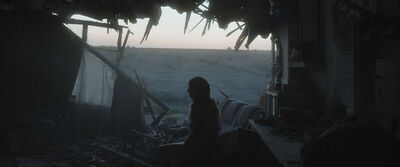
In the lyrical film “War Pony”–an evocative tale of recurrent tribulation and dogged community spirit–Native strivers and hustlers roam the brutal clime of the Pine Ridge Reservation in search of a life raft to another day. To understand the plight affecting those Oglala Lakota and Sicangu Lakota citizens of the Oglala Sioux Tribe and Rosebud Sioux Tribe, one must first be aware of the broken treaties that lead to their contemporary settlement and the tribal sovereignty that now governs these areas.

Up until “Reservation Dogs” and “Wild Indian,” Chris Eyre’s “Smoke Signals” was a notable exception as a mainstream work by Indigenous creatives. On the flip side, there are also innumerable examples of white folk exploiting Indigenous culture for either economic or artistic gain. With two white filmmakers helming “War Pony,” it would appear, at first blush, that another outsider’s conception of Indigenous history is in the cards. 

Co-directors Gina Gammell and Riley Keough want to avoid such perceptions. Their film is a collaborative effort that began while Riley was filming “American Honey.” There she met two extras, the eventual co-writers of “War Pony,” Bill Reddy and Franklin Sioux Bob, who shared their Rez stories. These conversations would eventually inspire the trio and Gammell to compose their feature. The fruits of their exchange bear an immersive, albeit deeply cliched, collision between magic and neorealism. 

The electrifying first-time actor Jojo Bapteise Whiting stars as Bill, a 23-year-old swaggering striver with a baby momma, two young children, and zero career prospects. He pulls a few tricks and hustles when he learns his baby momma, presently in jail, needs $400 for bail. First, he buys a poodle from a shady character hoping to breed the dog for big money. Then he attempts to pawn his car and his PS4. But he makes his firmest bid toward upward mobility when he sees Tim (Sprague Hollander), marooned with his pickup truck at the side of a dirt road. 

Though Tim is married, he often fools around with Indigenous women. He has one in his truck. He elicits an agreement for Bill: In return for taking the woman home, he’ll give Bill the $400 he needs and a job at Tim’s turkey farm. The opportunity is a hustle that Bill hopes will grant him stability. 

Ladainian Crazy Thunder also stars as Matho, a troubled 12-year-old kid living with an abusive drug-dealing father whose life seems to be hitting all the worst potholes. Matho and Bill aren’t directly related, not on familial grounds, but they are direct foils. Their divergent arcs, occurring in two different spaces on the Rez, convey the beginning of a cycle and the result of one. As Matho shifts from temporary homes to squatting in derelict buildings, from taking beatings to dealing drugs, from one flawed parental figure to another, you get the sense these are all obstacles Bill must have hit long ago. 

Sometimes the editing between their narratives can be sporadic, leaving the impression that you’re watching two movies rather than two intertwining stories. Toward the end of the film, their eventual meeting veers toward predictability, even if I did appreciate the quiet staging and the soothing balm it provides.

“War Pony” has a cathartic transcendence when it engages with the tight bonds that form the community. A prominent instance occurs during a funeral when a convoy of cars swerves in snake-like unison as the plains landscape stretches behind them. Another happens at the end when the filmmakers combine the images of buffalo (the animal magically springs from nowhere) and turkeys for an anarchistic redistribution of resources, a kind of retribution for the appropriation that continues today. 

And yet these scenes are few and far between in a movie that solely prizes trauma. At this point, it’s become a cudgel to accuse a film of being a shallow endeavor because it litigates the stories of a people through its possible horrific reality. Some lives are inherently disturbing. And it can be superficial to ask for nice bows to be affixed to tragic stories, particularly if they’re drawing on real-life experiences. But it’s not just the inner-city milieu of “War Pony” that recalls some of the cliches common to Black gangster dramas of the 1990s. It’s also the film’s inability to convey an existence outside of unwed mothers, apathetic parents, and brutal socioeconomic disparity that leaves one wanting. 

Maybe that’s just the reality of Reddy and Sioux Bob’s community and the plethora of first-time extras and actors drawn from the area. From an outsider’s perspective, however, as poetic and otherworldly as “War Pony” can be, the reality of its people never feels real. 

Now playing in theaters. 

Susie Searches 0

Susie Searches

Sophie Kargman’s “Susie Searches” is a movie in search of its audience. The story follows Susie (Kiersey Clemons), a plucky misfit college student who runs her own largely unnoticed true crime podcast between classes and works at an on-campus burger joint. She’s got a knack for solving mysteries, or so she tells us. At first glance, this movie feels like it’s made for a younger audience. The dialogue is cute and bouncy but simplistic. The other characters are fairly silly caricatures, from Susie’s weird boss Edgar (Ken Marino), her dismissive coworker Jillian (Rachel Sennott), and the bumbling cops led by Sheriff Loggins (Jim Gaffigan). But “Susie Searches” is no “Nancy Drew” or “Harriet the Spy.” The movie has a twist that pulls it off-course, leaving more questions than answers. Is it still fun for younger audiences if the plot takes such a sharp dark turn? Is it fun for anyone? 

Co-written by Kargman and William Day Frank, “Susie Searches” starts strong but loses its way after our heroine solves her biggest case yet: the disappearance of local campus heartthrob Jesse Wilcox (Alex Wolff), a meditation YouTube star whose good looks and kind words make him a favorite of just about everyone he meets. Before the case, we see that Susie does not enjoy such adoration. She’s lonely and rejected by classmates, caring for her ailing mother by herself, working hard on a podcast practically no one listens to, and stops by the sheriff’s office to help but is mostly brushed off. 

When Susie solves the case, her world changes. She becomes famous overnight, and how people talk to her also changes. The dean of her college glowingly refers to her as his star pupil as he readies her for the cameras. She nervously smiles as reporters (all in the worst stock impersonations of how journalists behave) ask her questions about how she rescued Jesse from an unknown kidnapper. But the bubbly, feel-good underdog feelings are short-lived. This mostly happens within the first half hour of the movie’s brief runtime, leaving the rest to flounder through the idea that maybe Susie isn’t everything she seems. 

Kargman’s feature debut expands on her 2020 short “Susie Searches,” in which she played the braces-clad aspiring sleuth. However, what might have made a strong premise for a short does not translate to a foolproof feature. As a director, she plays with other thriller visuals—like freeze frames, intense close-ups, and split diopter shots—increasing their use towards the climactic end. But it feels at odds with the tone of the movie’s first third, that of a young detective solving her first big mystery. It’s as if the two parts have been Frankensteined together, and it doesn’t work. 

As Susie, Clemons does her best with the conflicting material, swinging from an all-smiles people pleaser, a determined podcaster narrating her latest theories, to a panicked-stricken observer. For the most part, the rest of the cast is one-note despite their talents. Wolff plays his character as cute and charming, leaning on Susie after his rescue and as the mystery grows more sinister. Gaffigan’s sheriff reluctantly opens up to Susie and seems incompetent until a pivotal moment. Sennott is unfortunately shortchanged in her part as Susie’s disgruntled coworker. Marino’s arc is even more inexplicable, almost like a role that would get made fun of on “Party Down.” 

Part of the novelty of “Susie Searches” lies in how it reflects the growing popularity of true crime podcasts. In June, the Pew Research Center confirmed what many listeners of true crime podcasts already knew: it’s the most popular podcast genre, and the majority of the audience are women, at a rate of almost 2-to-1. The third season of “Only Murders in the Building,” which uses a podcast in its first season to explore crimes in an apartment building in New York City, premieres next month. Numerous shows and docu-series have spun off of popular podcast series or even launched with an accompanying podcast for further listening. Although “Susie Searches” incorporates much of the language and tropes you’d hear in just about any scripted true crime podcast, it doesn’t seem to take kindly to the form itself. It takes a more cynical view of how those shows have influenced their hosts’ mind, possibly even condemning them for what happens. It’s as if the script views her passion project as a gateway to bad behavior, which adds to the feeling of disconnect from the first leg of the movie. If “Susie Searches” wanted to critique the true-crime podcast trend, it could have done so more directly. For now, we have a movie at odds with itself and its main character.

Now playing in theaters. 

Sympathy for the Devil 0

Sympathy for the Devil

I’m really not trying to make a cute play on words by calling “Sympathy for the Devil” godawful.

Directed by Yuval Adler from a script by Luke Paradise and co-produced by star Nicolas Cage, who’s once again leaning hard into his “throwing garbage against the wall to see if it sticks” mode of accepting projects, this is kinda-sorta what they call in the theater a “two-hander,” one in which the beleaguered Ordinary Dude played by Joel Kinnaman runs afoul of a maniacal evildoer taking him on the opposite of a joy ride, at gunpoint, out of Las Vegas and into the unknown. 

We learn right off the bat that Kinnaman’s character, unnamed at this point—he’ll get two names later, but family members call him David—is about to be a father. He’s driving to a hospital to be with his wife after he’s dropped off his adorable tow-headed little fella. In a parking garage, though, is a guy with deep scarlet hair, a demonic goatee, and a revolver—that’s Cage (did you guess?), whose character is also unnamed. (He plays “The Passenger,” you see, and this lack-of-nomenclature gambit can work if the movie is good enough—see Walter Hill’s “The Driver”—but feels pretentious when the movie is, well, this.)

The problem we have right from the get-go is that neither of these personages gives the viewer much to care about. Sure, Kinnaman’s about to be a dad for the second time, but we know plenty of bad and indifferent folks who are fathers. As for Cage’s character, he’s not a character at all. He’s a Nic Cage mood ring designed to allow Nic Cage to do all sorts of wacky Nic Cage stuff. He sweats. He bugs out his eyes. He grins maniacally. He yells. He shrieks. He puts Alicia Bridges’ “I Love the Nightlife” on the jukebox at a diner he’s about to shoot up and dances to the song while bellowing the lyrics. At this point in the movie, about 52 minutes in, I figured I should be earning combat pay for continuing to watch.

Is there a plot? Well, yes. Cage’s character insists he knows David from long ago. Given the actions he describes—criminal bookkeeping, insanity, murder, lots of shady underworld figures—it sounds like that “long ago” was maybe the 1995 Sundance Film Festival, where lots of would-be Tarantino clones were thriving.

When the narrative isn’t tiring us, Cage talks about what his revolver will do to Kinnaman if and when he shoots him in the face or the back of the head. Does the verbal description of getting shot in the head or face make the prospective shooting victim more fearful than the mere presence of a gun pointed at those areas? So this movie believes. Although this may be more a matter of filling up time, giving Cage “provocative” things to say in this pointless exercise. Maybe during one of his drafts, screenwriter Paradise figured out he was leaning on the device pretty hard because there’s a line late in the film where the character refers to the habit. Cage also says things like, “The truth is rarely plain and never simple,” and he shows a lot of nerve when he upbraids Kinnaman’s character for his “cliched” family story.

This is not, I should clarify, strictly a two-hander. There’s a cop, guess what happens to him, and there are diner staffers and customers. Guess what happens to them. “We still have miles to go before we sleep,” Cage’s ostensible Devil says early in the movie. And indeed, it does feel endless.

Now playing in theaters. 

The Beasts 0

The Beasts

On its surface, “The Beasts,” an atmospheric Spanish true-crime thriller, seems like a bleak parable. A pair of outsiders, inspired by real-life Dutch eco-farmers Margo and Martin Verfondern, find themselves trapped in a heated dispute with their provincial Galician neighbors.

The aggrieved farmer Xan (Luis Zahera) and his skittish brother Loren (Diego Anido) resent the non-native couple, Olga and Antoine (Marina Foïs and Denis Ménochet), for preventing the sale of their land to a wind turbine company. So Olga pleads with Antoine to avoid (or at least stop covertly filming) an increasingly combative Xan. That’s easier said than done for Antoine, given both Xan and Lorenzo’s aggressive and antagonistic behavior. The resulting conflict also seems fairly straightforward: while Xan resents Antoine beyond reason, Antoine refuses to abandon his land.

Thankfully, co-writer/director Rodrigo Sorogoyen’s focus on Antoine and Xan’s emotionally charged stalemate keeps “The Beasts” from devolving into yet another quasi-artful and pseudo-moral genre movie that pits intolerant bumpkins against ignorant city-slickers.

Mood trumps morality in “The Beasts,” partly because Sorogoyen, in collaboration with director of photography Alejandro de Pablo, art director Jose Tirado, and sound designer Fabiola Ordoyo (among others), focuses on the stale air and the dead leaves that cling to the almost deceased Castilian village of Quinela de Barjas, about a 35-minute drive from the nearest inhabited city.

A half-stifling and half-enchanting air of stagnation only deepens the characters’ petulant, self-serving dialogue, not to mention their predictably fruitless and perpetually escalating tit-for-tat fighting. Many filmmakers are praised for making their location-shot settings the real stars of their movies. “The Beasts” wouldn’t be half as compelling if its creators didn’t draw so much out of their movie’s desolate and beautiful ghost town.

Sorogoyen was smart to emphasize, both in his movie and an interview in the movie’s press notes, that “The Beasts” only uses real events as a starting point. Because while the grievances that define both Antoine and Xan may be topical, neither character is much more compelling. Rather, “The Beasts” is arresting because of its creators’ stylized vision of reality. Some long takes present time in a naturalistic way, and some indoor scenes use natural-looking light to deepen our appreciation of what Quinela de Barjas looks and sounds like. These fairly standard filmmaking techniques also redirect our attention to the oppressive stillness that surrounds Antoine and Xan. Sorogoyen’s characters repeatedly bump into each other and just as often butt heads, despite tentative and often sincere-looking offers to hear each other out. By focusing on the impenetrable gloom surrounding Antoine, Xan, and their respective partners, Sorogoyen makes “The Beasts” more about the tragic inevitability of his protagonists’ dispute than whatever they say they’re fighting for.

“The Beasts” also deserves praise for its ensemble cast’s uniformly strong performances, especially since neither Ménochet nor Anido have had much experience as professional movie actors. Sorogoyen and de Pablo’s camera moves with purpose, leaving viewers with the impression that we’re either trailing after Antoine and Xan or looking up with them as they struggle to anticipate whatever’s about to happen. They retrace their steps slowly, sometimes even literally uphill, or balance and shift on their back feet, waiting for something they’re sure is coming but still can’t fully prepare for. That’s a nightmarish headspace, the kind that great horror movies thrive on.

“The Beasts” is ultimately a parable about neighbors who keep looking at each other, with anger and sadness, for an impossible miracle. They sort of get one, but it provides no relief. Sorogoyen, who co-wrote “The Beasts” with Isabel Peña, breaks his story into two uneven halves, the second of which shifts the plot’s focus away from Antoine and onto Olga and Marie (Marie Colomb), their frustrated daughter. A seemingly inevitable plot twist necessitates this narrative break, but even then, the movie is more about the sheer intensity of its characters’ emotional deadlock. “Nobody cares about the truth,” Marie says, and she’s right, of course. Olga is also right when she tells Marie, “You don’t understand,” because Marie has not lived in Quinela de Barjas for as long as she has, so she hasn’t taken in as much dead, comforting air as her mother.

Sorogoyen and Peña may ultimately lead us, alongside their characters, to a pious, anticlimactic finale, but it’s almost hard to care, given how real Antoine and Xan’s world seems. The toxic air surrounding these two characters does not clear by the movie’s end; it accretes and suffocates everyone who breathes it. Antoine and Xan’s dispute is, therefore, less about turf or hurt feelings than how the world looks when you’re waiting for the worst to happen. It does, and it’s as obvious and upsetting as it needs to be. “The Beasts” may not be realistic, but it is genuinely eerie.

Now playing in theaters. 

Talk to Me 0

Talk to Me

Danny and Michael Philippou’s “Talk to Me” cleverly imagines a deadly craze that would easily sweep a generation—this horror movie’s plausibility is one of the freakiest things about it. The social media-feeding frenzy involves spiritual possession, made possible by grasping a ceramic-encased severed hand graffitied with names and symbols that suggest a long line of previous owners. Aussie teens like Mia (Sophie Wilde), Jade (Alexandra Jensen), and eventually Jade’s younger brother Riley (Joe Bird) are the latest players in such a game, which has them seeing dead people and giving them access to their tied-up bodies for 90 seconds, tops. When the spirits are “let in,” the teens suddenly shoot backward in a chair (the camera jolting back with them, the sound mix dropping out), and their pupils burst into a deep black. They shiver, choke, and asphyxiate as if they are gonna die. Meanwhile, their giddy friends surround them, filming. What a rush, as a YouTuber probably once said about eating Tide pods.  

It’s a brilliant device for a modern horror story (Daley Pearson is credited as the concept’s creator), and a franchise waiting to happen (in the case of horror, that often means a fruitful idea is intact, like when “Final Destination,” “The Purge,” and “Saw” first debuted.) “Talk to Me” could easily lead to a higher body count or a more directly spooky story in its sequels. But the game begins small here with a sincere pitch that aims for the gut—this first installment is about watching someone be possessed by horrible ideas of grief, and the damage their decisions inflict on their loved ones. 

There are rules for how this dance with death can be done “safely,” and in a snappy montage that mixes partying with possessive play, we get a great sense of what extreme fun it can be for Mia, her friends, and the hand’s current owners, Hayley (Zoe Terakes) and Joss (Chris Alosio). But everything shifts in a nifty, nasty instant when one of the spirits that overtakes young Riley turns out to be Mia’s mother who died by suicide two years previous. Or at least the spirit claims to be. A freaked-out Mia forces this one communication with the dead to go on too long, putting Riley in a coma with many self-inflicted gashes on their head, an attempt by the spirit to kill his soul and fully control his body. 

The second half of “Talk to Me” suffers from being yet another recent horror movie built on the trauma of loss, but it gets a special amount of layers from Sophie Wilde’s excellent performance. It’s not just about Mia trying to hold onto contact with her mother, but her need to not lose her new family, that of Jade, Riley, and their protective mother Sue (played with dry toughness by Miranda Otto) in the process. We ache for Mia to be OK, especially since she’s such a bright personality—her constant yellow wardrobe always pops, and she has sweet scenes with Riley, like when the Philippous hard-cut to them early on bursting out Sia’s “Chandelier” during a night-time car ride. Wilde exemplifies a feverish, youthful need to balance both the pains of the past and a jeopardized future, and by trying to hack the hand’s magic, she isolates herself from reality in the process. “Talk to Me” could have been more rote without such voluminous work, but Wilde’s tragic interpretation—her big-screen debut—is one for the horror movie history books. 

The Philippous rarely show us the TikToks or Snapchats that document these possessions, but we don’t need to see them: these freaky scenarios play out exactly as they might in real life, with writers Danny Philippou and Bill Hinzman allowing teens to be teens. When everything starts to fall apart—and souls are on the line—the characters just become more stubborn, their desperation making things worse and even more dangerous. “Talk to Me” has the bare wisdom of a coming-of-age tale, and while it conjures a few excellent moments of guffawing disbelief from the audience, it never talks down to the audience it wants to reflect. The Philippous’ filmmaking comes from YouTube (known there as RackaRacka), and their eye for this psychology is more savvy than it is cynical. 

A good deal of nasty fun is scattered throughout “Talk to Me,” especially for fans of well-made blood-dribbling head wounds, sound design that makes you wince without relying on jump scares, and a tone that doesn’t play nice. Plus, the movie’s playful possession scenes get better and better (the movie’s young cast is impressive wriggling in those chairs, even if the possession make-up style looks familiar to so many other movies). But “Talk to Me” can bank too much of its quality on simply being a good pitch best fulfilled later—it’s hard not to see its gripping opening scene of terror, a one-shot through an unrelated, crowded party, as an isolated red herring not followed through by the rest of the film. The movie’s overall restraint is admirable, and best felt in the numerous moments when the camera holds on someone’s scared face, so we can build dread about what ghoul they are looking at. But “Talk to Me” risks holding back too much despite its excellent concept’s promise. 

Whether or not we get more rounds with this hand of fate, “Talk to Me” lingers as a striking and confident directorial debut from the Philippous, whose penchant for hyper-active YouTube fight and prank vids is mostly evident in this movie’s emotional carnage. With such a playful send-up on a possession story, the Philippous have successfully crossed over into feature filmmaking, but it will take a little more genre ingenuity for us to keep talking about them. 

Now playing in theaters. 

Teenage Mutant Ninja Turtles: Mutant Mayhem 0

Teenage Mutant Ninja Turtles: Mutant Mayhem

As the leads in Jeff Rowe’s “Teenage Mutant Ninja Turtles: Mutant Mayhem” spoke with all the momentum of my kids when they have a bottle of Prime—it’s a new energy drink for those out of the loop—I thought about the difference between fast-paced and hyperactive when it comes to this kind of movie. “Spider-Man: Into the Spider-Verse” and its incredible sequel are undeniably fast-paced, but the momentum is right for the material. “The Mitchells vs. the Machines,” co-written by this film’s director, also packs so much into its runtime that it’s impossible to catch it all on first viewing. Those films are fast because they’re fueled by so much creativity that you can see their ideas bursting off the screen. “Mutant Mayhem” is fast because it thinks it should be. There’s a difference. Using its hyperactive nature to disguise how there’s not much going on, “Mutant Mayhem” is a pretty shallow venture thematically. Having said that, it also has undeniably strong visuals and enough creative voice work to make it tolerable on a hot August day when families need an air-conditioned theater for a few hours. I wish the mayhem of it all led somewhere more rewarding.

Yes, it’s another origin story. Despite being the seventh film to feature these characters, Rowe and co-writers Dan Hernandez, Benji Samit, Seth Rogen & Evan Goldberg go back to the beginning of the TMNT saga, opening with a scientist named Baxter Stockman (Giancarlo Esposito) creating the infamous ooze that turns ordinary creatures into mutants. When the authorities break into Baxter’s basement lair, the ooze is spilled into the sewers, and the rest is comic book history as a quartet of turtles becomes fast-talking humanoid creatures named Donatello (Micah Abbey), Michelangelo (Shamon Brown Jr.), Leonardo (Nicolas Cantu), and Raphael (Brady Noon).

Fans of the franchise know that the turtles are nothing without their leader, Splinter (Jackie Chan), a rat who was also transformed by the ooze and became the father to the teenage mutants after teaching them the ninja skills to protect themselves. Splinter is extremely overprotective, ordering the boys to stay away from human beings at all costs or risk being milked by them (don’t ask). A flashback reveals that Splinter tried to introduce himself and the turtles to the humans, but they were somewhat understandably terrified. Now they all live underground, as the turtles sneak out to get supplies and wish they could have a normal teenage life beyond the sewers.

Meanwhile, one of Baxter’s experiments responds very differently to the chasm between the human race and the mutants now living underground. Whereas Splinter wants to hide, Superfly (Ice Cube) wants something closer to vengeance. He’s assembled a group of mutants that include Genghis Frog (Hannibal Buress), Leatherhead (Rose Byrne), Rocksteady (John Cena), Wingnut (Natasia Demetriou), Ray Fillet (Post Malone), Bebop (Seth Rogen), and Mondo Gecko (Paul Rudd). Throw in Maya Rudolph as a mysterious figure trying to find the turtles and Ayo Edebiri as April, the human being who befriends the turtles and tries to introduce them to the above-ground world, and you have a stellar voice cast. Once Superfly and his cadre of creatures join the action, “Mutant Mayhem” gets exponentially more fun as each great actor is allowed fun voice beats to shine.

The visuals of “Mutant Mayhem” also explode when Superfly and his gang join in the fun as the animators bring their A-game to creative character designs that recall the source material but also pop on the big screen. The entire film has that “Spider-Verse” aesthetic that looks like a comic book come to life. The characters can go from simple animation that looks hand-drawn to something more like stop-motion animation and then back again in a manner that keeps the film visually engaging.

I just wish those visuals got more depth from their characters and story beats. “Mutant Mayhem” is ultimately a coming-of-age film, the story of four teenagers who discover a reality they want to live in between Splinter’s overprotectiveness and Superfly’s anger. While that’s an interesting theme, and it’s nice to see a version of this franchise take the word “teenage” seriously, it’s also pretty light for kids and their parents who can handle more complex themes. It feels like there’s a variation on this script that takes as many risks as the visuals do instead of going predictably from point A to point B in the coming-of-age playbook. 

Most damagingly, as ridiculous as this may sound, we really don’t learn enough about the turtles, who are reduced to one or two traits as they’re pushed along the action track of the movie. De facto leader Leonardo is the most responsible of the crew and develops a crush on April. The other three barely even get that much development. Of course, not everything can be “Mitchells” or “Spider-Verse,” but those films grounded pieces of the coming-of-age genre even as they raced through their stories. Maybe it’s a product of my age or lack of energy drink intake, but “Mutant Mayhem” too often just feels hyper.

In theatres on August 2nd.

Happiness for Beginners 0

Happiness for Beginners

We first see Helen (Ellie Kemper) sitting alone at a party. All around her, people are talking, drinking, laughing, and dancing. She does not seem to notice anyone and no one notices her. She pulls out a piece of paper to re-read her list of goals for an upcoming hiking trip:

  1. Find a deeper connection to nature.
  2. Rise up from my own ashes like a freaking phoenix.
  3. Earn a damned certificate.

The party’s host is Helen’s brother, Duncan (an endearing performance by Alexander Koch), and she is only there to give him her keys so he can house-sit for her. But he has gone off with his girlfriend, so she gives them to Duncan’s best friend, Jake (Luke Grimes of “Yellowstone”). He asks her to stay: “You used to be so much fun.” She bristles, “I’m like so much fun you wouldn’t be able to comprehend it.” We don’t need to wait to see her give Duncan a laminated to-do list for the house-sit to understand that what she cannot comprehend is how not fun she has become.

The ashes she wants to rise from are her divorce and the unhappiness that led to it. But you do not have to have seen many movies to guess that she will learn to acknowledge some other ashes from her past on the trip and that when the leader, Beckett (Ben Cook), says that the hike, 81 miles on the Appalachian Trail in Connecticut and New York, will be “daunting but beautiful,” he is also talking about life and all of the challenges and opportunities we face.

You will probably also guess where this is going when Duncan’s friend Jake shows up as one of the hikers. He and Helen pretend they have not met before to avoid complicated explanations. Like a mapped-out trail, you know where it will end up, but there’s enough to enjoy along the way.

And there is plenty to enjoy here, including cinematographer Daniel Vecchione’s postcard-pretty scenery of New England fall colors, some poppy needle drops, and a gorgeous Pablo Neruda poem. Some characters are, as one of them says, “all more than we seem to be.” Each of them has an opportunity to surprise us and themselves. Shayvawn Webster has a warmly positive energy as the upbeat Windy, who has one of the film’s most meaningful moments relating to the title. Gus Birney probably has the most surprising revelation as the initially ditsy Kaylee. Even Beckett, the barely-older-than-a-Boy-Scout leader, shows us another side. The pre-credit sequence has a funny compilation of his most frequent comment. Blythe Danner is always a treasure and pure delight here as Helen’s grandmother.

The story’s heart is Kemper’s Helen, of course, and this role is a perfect fit. Helen is less sunny than most of Kemper’s roles, allowing her to show more subtlety, depth, and complexity. Her essential radiance is evident throughout, even with (apparently) no make-up in the scenes on the trail. Kemper has a monologue, a story from her childhood, which calls on her to show a vivid range of expressions as she recalls the before and after of a traumatic loss. It is very moving to see the fleeting softness and joy on her face as she remembers the “before” part of the story and then the grief, shame, anger, and effort she has put into compartmentalizing those memories for many years. 

Grimes has a less showy role; one might say the Ken to her Barbie. His big reveal will be no surprise to anyone. But he brings a welcome tone of wry humor to Jake, and we can see his feelings for Helen long before she does. More important, by that time, we want her to see them. 

Writer/director Vicky Wight adapted the popular novel by Katherine Center, following their previous collaboration on “The Lost Husband.” She keeps the tone bright but makes room for quieter moments. Some in the audience might be inspired to hike the Appalachian Trail, but all will be reminded that the beginner’s first step to happiness is gratitude. 

On Netflix now.

After the Bite 0

After the Bite

We humans are pretty arrogant Earth tenants, aren’t we? The amount of space we take up, the damage we readily inflict, the cohabitants we sideline—we’re the planet’s loudest renters, which makes us think we own the place, and that every other species should act accordingly. “After the Bite,” an engrossing new documentary that only starts with one Cape Cod town’s debate about what humans can do to protect themselves from a great white shark surge, brings such awareness to the surface. Director Ivy Meeropol (“Bully. Coward. Victim. The Story of Roy Cohn”) weaves an impressive tapestry of conflicting perspectives—man and animal—that’s far more entertaining and insightful than your average Shark Week fare.

While the themes within “After the Bite” are as lasting as our ticking time on this planet, it focuses them on a tragedy in 2018, when a young man named Arthur Medici was attacked and killed by a shark off a beach in Wellfleet, Massachusetts. The attack wasn’t a fluke—great white sharks had been seen more often near the beaches in past years. But it inspired a wealth of various responses. Some people wanted to learn how to better live with them, like the scientists who tag sharks and can follow their movement. Others thought about where to place guilt: on bad infrastructure, on the ballooning seal population that mixes with human swimmers, and more. 

Meeropol’s film doesn’t push the tensions in these head-butting perspectives or try to make much of a plot about them. But the documentary’s observant nature is plenty fascinating, as it looks at the many beings who feel the immediacy of this problem and are participants in an ecosystem that doesn’t prioritize a human’s safety. Suzy, a head lifeguard, tells us about a nightmare she has about a shark attack; John, a father, and resident of Wellfleet, talks about how he wouldn’t let his surfer daughter in the water after Arthur’s death, and tells a town hall meeting that humans are not being protected. “After the Bite” is full of plenty of food for thought about an issue that it magnifies and treats with many distinct POVs. 

It’s not just through interviews, but with Meeropol’s following-around footage, like when we’re in Suzy’s car as she drives to work or on a boat with a group of fishermen venting about how global warming has altered the fishing scene, for both sharks and their livelihood. We even get a seal’s POV as a fisherman hawks chum into the blue; the camera is thrashed about, bumped into by leathery noses and whiskers. (Meeropol’s film has an important stance—it works to treat animals as equals.) In one concise passage after another, “After the Bite” looks at different players in this conundrum, putting a microscope on this community that has been polarized by terror.

For all of the moments in which “After the Bite” works to offer more shark information than “Jaws,” Meeropol and company do conjure their own special thrilling moment later on. A great white nemesis is finally shown close-up, nibbling on a large whale carcass. It’s a huge shark, and it conjures equal awe and fear as it slithers past boats (and one freaked-out guy, Noah, who is in a tank and gets real up close). The captured moment is as natural as possible, but with Meeropol’s work’s added context, it is bizarre and jarring. 

Meeropol’s editing volleys between many different tones, but they enrich each other—it makes clear how this beach culture can create joy (as seen in a shark-themed burlesque in nearby Provincetown) just as much as fear, evident in a captured moment where Suzy and her crew think they see a fin in the water. “After the Bite” doesn’t just capture a problem, but the life of the place that’s concerned about it. Like the best documentaries, it’s evident how the people interviewed in “After the Bite” have long had this issue on their minds, whether in conversation or their dreams. One of the most memorable tokens comes from surfer Dana, who runs the beach parking lot gate with no shoes on and jokes with drivers-by until he can partake in the shark-scattered waters. “Humankind must learn humility in the face of nature,” he casually states. We then get to see him paddle away from the beach, ready to surf, without a manmade entitlement for his safety. 

Now playing on Max. 

Streetwise 0

Streetwise

Time stretches and snaps like a rubber band in “Streetwise,” an atmospheric Chinese neo-noir thriller about Dong Zi (Li Jiuxiao), a young enforcer for Xu Jun (Yu Ailei), a cut-throat Sichuan debt collector. Dong Zi does almost everything Xu Jun tells him to do, with the notable exception of staying away from Jiu’er (Huang Miyi), a standoffish tattoo parlor owner. Even Dong Zi’s deadbeat ex-gangster dad (Yao Lu) tells Dong Zi to avoid Jiu’er, and that guy’s not exactly an upstanding citizen.

The main problem with Jiu’er and Dong Zi is also a problem with time and how it passes for the lost, uncomfortably close antiheroes of “Streetwise.” Because Jiu’er was once the ex-wife of Mr. Four (Sha Baoliang), a powerful local mobster, who was previously mentored by Xu Jun, and he owes Four serious money. And while Dong Zi is mostly loyal to both his father and his boss, he also can’t fully repay his two dads. So time moves at its own pace in “Streetwise,” though it doesn’t move naturalistically or in “real time.”

Writer/director Na Jiazuo arranges objects—and people, and places, and vehicles—with a keen eye for visual compositions, even when the people on-screen are only shuffling down alleyways and shooing away bored sex workers (“Want some fun?” “Have your own fun!”). Na also often cuts mercilessly from one scene to the next, leaving viewers to adjust their points of view as his drama frequently shifts its focus without ever really progressing. A sudden, anticlimactic ending feels simultaneously like too much and too little, which also seems weirdly fitting. “Streetwise” evaporates with its characters, who can’t picture the world beyond their riverside home.

“Streetwise” is not a slow movie, but it does move unhurriedly, and so do its doomed protagonists. They circle around and bump into each other but never really try to escape. What if you were simultaneously too comfortable and hemmed in by the people and the relationships that are obviously holding you back?

Dong Zi tends to be the focus of Na’s movie, but his problems are only symptomatic of his seedy, enchanting, isolated environment. Because Dong Zi’s father is the same kind of hustler as Xu Jun, albeit more slovenly and less motivated, and Xu Jun’s cut from the same cloth as Four, his abusive, faux-benevolent former pupil. So it stands to reason that Dong Zi can’t leave Jiu’er alone. She’s also stuck in place, but can’t bring herself to flee or take up more space. Dong Zi and Jiu’er aren’t happy together, but they do recognize themselves in each other.

Time moves deliberately, and its passage is eulogized through Na’s precise framing and hard cuts, the combination of which can sometimes feel jarring, like getting repeatedly splashed with ice water on a clammy day. Ambient noise on the soundtrack also reminds viewers of how lived-in and genuine this beautiful, melancholic hangout movie often feels.

“Streetwise” is one of a handful of recent mainland Chinese neo-noirs, a micro-trend that includes such recent standouts as the sweaty animated 2017 heist comedy “Have a Nice Day” and the neon-drenched 2019 crime drama “The Wild Goose Lake.” Na’s movie does not, however, feel like more of the same, despite some shared generic points of contact. Rather, “Streetwise” reflects its characters’ peculiar acceptance of lives that even they don’t believe they’ve chosen for themselves.

Like many great noir characters, Dong Xi and his fellow Sichuan residents are trapped by designs that they’re only so on top of. They’re not big fish in a small pond, but rather medium-sized fish in a shallow and slowly draining pool. As they circle the drain together, they recognize the beauty and strangeness of the circumstances that have brought them together. This place, these people, this life, it all feels so easy and familiar. How could it ever really end?

“Streetwise” isn’t the kind of movie you watch for the plot, which is mostly incidental. This is a small-scale drama whose emotions often feel overwhelming, though never bombastic and rarely familiar. Because while it is a film noir at heart, “Streetwise” is also very much about people who live in perpetual hope and denial. It’s a cynical movie, but it’s also gorgeous and morbidly funny.

Na packs so many rich details into every camera frame that it’s easy to overlook how time runs differently in “Streetwise,” even when the camera is hand-held or moving. He encourages viewers to loiter with his characters for longer than most of his contemporaries might, but Na also keeps “Streetwise” moving with an assured pace and a rhythm that’s both mysterious and assured. It’s just over 90 minutes long, but “Streetwise” still feels like an epic poem, shrunken down and sparingly polished for maximum effect.

Now playing in theaters. 

The Beanie Bubble 0

The Beanie Bubble

This very strange cultural moment in which filmmakers are fascinated with business rise-and-fall stories from the ‘80s and ‘90s (“Air,” “BlackBerry,” “Tetris,” and more) has brought us to beanie babies. Apple TV+’s “The Beanie Bubble” unpacks the fad that turned stuffed animals into collector’s items, making them an absolute obsession for millions. However, you’ll learn little more from “The Beanie Bubble” than you would from a Wikipedia page, and you’ll have slightly less fun doing so. A frustratingly inert film in every way, “The Beanie Bubble” has no POV and nothing to say. It’s a film that never really takes a stance, offers an opinion, or even sketches interesting characters, partly because of co-director Kristin Gore’s (daughter of the former Vice President) writing decision to jumble the chronology and tell this story via multiple narrators. Instead of offering multiple perspectives, these various voices blend into a dull hum in this skeleton of a film with absolutely no meat on its bones.

Zach Galifianakis plays Ty Warner, someone who will obviously betray his personal and professional relationships because there’s no movie otherwise. From the beginning, “The Beanie Bubble” plays with time and POV in baffling ways. It jumps back and forth between the early days of Warner’s eventual stuffed plaything empire and those that unfolded when Beanie Babies became a capitalist dream before crashing like the truck accident that scatters bright stuffed toys across the freeway in slo-mo behind the opening credits. It’s hard to discern initially, but this is basically the story of three women who get drawn into Ty’s toxic orbit. The desire to tell a story from multiple perspectives is ambitious, but it’s ultimately fatal when one realizes that none of these stories have been fleshed out beyond their basic character traits. And watching talented performers get stranded by this inert script can be incredibly frustrating.

The talented performers include Elizabeth Banks as Robbie, the woman who met Ty in the apartment building they shared and formed a quick friendship. After a few drunken conversations, Ty sold his deceased father’s antiques, and the two started a business together in 1986, Ty Inc. Of course, as the company expanded and Beanie Babies were developed in 1993, Ty pushed Robbie aside, and Banks sells the betrayal aspect of this business narrative well even as her character feels too much like a device for the other three. The constant jumping back and forth to early Ty Inc in the ‘80s and the breakout success of the ‘90s is like little more than a reason to pay for more pop music needle drops. And the weirdest thing is how much it drains the film of arguably it’s most important chapters, never illustrating how Ty/Robbie went from dreamers to cynical purveyors of mass consumption because the film is never allowed to gain momentum or track development. It’s one of the most bafflingly constructed scripts in years.

Sarah Snook of “Succession” fame makes out a little better as Sheila, who meets Ty in a moment when she’s not really looking for love or commerce, but ends up marrying him, and her daughters help design the Beanie Babies. Again, that Ty will eventually push Sheila and even his stepdaughters aside for financial gain is depressingly inevitable, but Snook gives her admirable best to another shallow character. So does Geraldine Viswanathan as Maya, the woman who made history in two ways (at least as presented in the film). At a toy fair, she tells a customer looking for sold-out Beanie Babies that they were a limited run, creating the demand for collectors that would drive the phenomenon. She also is credited with pioneering internet commerce, which was the lighter fluid for this craze, as collectors compared notes in the early days of chat rooms.

What story are we telling with “The Beanie Bubble”? No one ever answered that question. The end montage tries to make it about the American hustle for a new trend like NFTs or Pokemon, and yet we haven’t been watching that movie, just a series of scenes loosely based on things that possibly happened. “The Beanie Bubble” is another product from the corporate biopic factory line, but this one wasn’t examined enough for quality control before it was shipped. You should probably return it.

In theaters today. On Apple TV+ July 28th.