Author: jose

The Lesson 0

The Lesson

Early on in this dreary would-be psychological thriller, the literary mandarin J.M. Sinclair, played by Richard Grant, shares with an interviewer his observations on the writing life. “Now, average writers attempt originality. They fail. Universally. Good writers have the sense to borrow from their betters. But great … great writers … steal.” He then breaks into a cocky grin and laughs wheezily, like Mutley on “Wacky Races.” I’m sure not on purpose; I trust Mr. Grant has been fortunate enough to have never been exposed to that cartoon.

The adage that Sinclair paraphrases may have, um, originated with T.S. Eliot or with Igor Stravinsky, who applied it, of course, to composers. And it’s a not entirely untrue and not entirely un-useful aperçu. Still, if you’ve been writing for a long time, even in the relatively unheralded trenches of criticism, you’re likely sick of hearing it. God knows I am. In any event, Sinclair’s observation, aside from adding dimension to his character (not a particularly interesting dimension, given how tired is his pet observations), also serves as, speaking of phrases we all ought to be thoroughly tired of, a kind of Chekhov’s Act-One-Gun for the plot.

“The Lesson,” directed by Alice Troughton from a script by Alex MacKeith, aspires to be high-toned but only gets to the peak of a cliché slag heap. The ostensible protagonist is Daryl McCormack’s Liam, first seen being interviewed himself, speaking of his first novel, about a ruined patriarch trying to reassert power over his fraying realm. In a flashback, the unpublished Liam is summoned by “The Agency” (not the C.I.A.) to audition for a tutoring gig. Bertie, the son of literary lion Sinclair and his French wife Hélène (Julie Delpy), needs a leg up to get into Oxford. Young and pale and poor of attitude, Bertie (Stephen McMillan) resists Liam’s friendly suggestions about learning critical thinking and insults the guy at family dinners. Nevertheless, Liam gets the gig, moves into the family’s palatial manor (this is a world in which literary mandarin status still pays big), and starts putting Post-It notes on his mirror; observations on the family that he hopes will feed a literary work of his own.

The Sinclairs are one of Tolstoy’s unhappy families; an older son, Felix, committed suicide by drowning himself in the manor lake a few years back. In another excerpt from a public interview, J.M. gets into a snit when asked about his son’s death. Among other things, the tragedy seems to have blocked J.M.

Hélène takes to Liam to the extent that she wants to hire him directly, cutting out “The Agency.” In this movie, no one has ever seen any other movies, so Liam thinks this is an excellent idea. And he also very gladly signs an NDA. We also learn that the window of Liam’s room—which had once belonged to Felix (and the house does appear to have a lot of rooms, so why Liam’s been boarded in such a grief-weighted space doesn’t make much sense but go on)—looks directly into Hélène and J.M.’s bedroom, and one night Liam watches while J.M. performs cunnilingus on his wife. “Don’t do that, dude,” I said to the screen as this happened. “This is a border from which you cannot step back.” Oops, then Hélène sees him watching and smiles. “You’re in it now, pal,” I said to the screen. But honestly, I wasn’t that concerned.

Because, come on: this is one of those movies that goes on for an hour and forty minutes because someone doesn’t have the common sense to get the hell out of Dodge twenty minutes in. When J.M. asks to read Liam’s novel-in-progress and offers his own work for Liam’s delectation, the subsequent comparing notes session goes poorly, and Liam contrives to get some of his pride back, helped by an explosive (or so the movie hopes) discovery.

When all the dominoes fall, it’s so neat, so pat; there’s no credibility, and with that gone, any opportunity for emotional resonance goes pffffft as well. Some might expect this picture to be redeemed by juicy performances, but that’s not the case; while none of the performers phone it in, the script gives them only the most commonplace ideas and states to convey. “The Lesson” is a wash. 

Now playing in theaters. 

The YouTube Effect 0

The YouTube Effect

“Welcome to the internet
Put your cares aside
Here’s a tip for straining pasta
Here’s a nine-year-old who died.”
Bo Burnham, “Welcome to the Internet”

“The algorithm is a beast that really can’t be tamed once it’s been unleashed and it’s already been unleashed.” In Alex Winter’s new documentary “The YouTube Effect,” these words—probably not a surprise to anyone at this point—are said by Anthony Padilla, founder of the YouTube channel Smosh, a very successful early adapter of the platform. Padilla is one of the interview subjects in “The YouTube Effect,” and he explains how the algorithm works and why it’s a huge problem. He’s a powerful interview subject because he speaks from the inside. He also speaks against his own interests. He’s benefited from YouTube. He was made by YouTube (Smosh launched on YouTube in the prehistoric year 2005). “The YouTube Effect” is a chronicle of extremely recent history and doesn’t cover much new ground. If you follow YouTube, big tech, or any controversies surrounding social media, you will be familiar with everything here.

Recent history moves so fast that the now-ancient (i.e., the 1990s) term “24-hour news cycle” takes on an entirely new meaning. The “news” itself is off-road. We are in the whirlwind right now, and it’s hard sometimes to get perspective on what the hell is actually going on. Maybe that’s the point: if you don’t give people time to think, they won’t cause problems for you as you lug your money to the bank. To quote Bo Burnham’s song again: “It was always the plan / To put the world in your hand.” The 21st-century version of bread and circuses.

Winter interviews people from tech, writers who cover tech, as well as the original co-founder Steve Chen. (YouTube’s humble beginnings echo all the other startup legends, college dropouts with an idea, setting up in their parents’ garage.) Originally designed as a video version of the website “Hot or Not?” (what is it with social media behemoths starting with sleazy little concepts?) YouTube quickly took off into the stratosphere, so much so that even a couple of years later, it was hard to imagine the world without it.

It’s only 15 years of time, but so much has happened. Winter picks out some of the major YouTube moments: The Arab Spring, the 2020 protests, the New Zealand mosque shooting (live-streamed), Elliot Rodger, and the storming of the Capitol on January 6, 2021. But YouTube is too vast an eco-system to be summed up by its most high-profile and politically-charged controversies. Winter provides brief flashes of other famous (and sometimes controversial) YouTube figures/events: Shane Dawson, Tana Mongeau, James Charles … and who can forget Logan Paul’s “Japanese Suicide Forest” debacle? These eruptions in the YouTube community are still being discussed by creators on the channel. Winter doesn’t really go into these tempests-in-a-teapot, and this is probably a good thing because once you search “James Charles Apology,” you will lose hours of your life in a rabbit hole that goes to the center of the earth. I speak from personal experience.

Winter is after the Big Picture: how YouTube’s “recommended” algorithm changed the game, our world, and us. Susan Wojcicki, the former CEO of YouTube, is interviewed extensively, and her corporate-speak about the positive “connections” formed between “diverse” groups of people rings false, as does her reassurances of how hard YouTube works to make the community safe. There should be a debate between free speech advocates and those who think protecting people from death threats/doxing/SWAT-ting, etc., is good. There’s no reason compromises can’t be made. There have been times in the past—the anti-trust laws of the early 20th century, automobile safety, etc.—when regulations were imposed, and it was all for the greater good. This debate needs to happen but not in the current zero-sum atmosphere. Winter includes people who speak to it: a litigator who goes after social media sites for the “harm” they cause (and sometimes catastrophic harm), and Brianna Wu, a tech writer and video game developer who felt the wrath of gamers when she spoke out in support of Zoë Quinn curing so-called GamerGate. These interviews help clarify what is, at times, rather unfocused.

One very interesting interview subject is Caleb Cain, whose humble little YouTube channel blew up when he posted a video called “My Descent into the Alt-Right Pipeline.” Suddenly he was on all the news shows, talking about the dangers of YouTube and how the “recommended” algorithm led him by the hand from self-help channels to White Nationalism. Cain speaks eloquently about how quickly and effectively this process worked. He understands how brainwashing works because 1.) It actually happened to him, and 2.) He was able to snap himself out of it.

There’s a too-brief diversion into the disturbing world of YouTube Kids. In 2017, James Bridle wrote a piece on Medium called “Something is wrong on the Internet” after a deep dive into YouTube Kids, and it should have been a wake-up call. More could have been made of this truly sinister aspect of the platform—and human nature—in “The YouTube Effect.”

I rely on YouTube for research and entertainment purposes. I love the old talk show clips, the music not available on iTunes/Spotify (like Bing Crosby’s 1930s recordings!), and television movies from the ’80s starring Gena Rowlands, not available anywhere else. I love “React To” channels (made up mostly of Gen Z kids watching classic films for the first time. I highly recommend this wholesome rabbit hole.) But everyone knows how the algorithm works. You watch one video on a controversial subject out of curiosity, and it could be from a valid source, but suddenly, within minutes, your “recommended” nav bar is now filled with similar “content,” and you’re one click away from a video claiming the earth is flat.

Winter’s documentary goes far but maybe not far enough. In her interview, YouTuber Natalie Wynn (aka ContraPoints) observes that YouTube is not “a public forum,” but THE public forum and it’s owned and operated by two of the biggest corporations in the world. This should make everyone—no matter their political views—at least take a moment to pause and consider the implications.

Now playing in theaters. 

The League 0

The League

Sam Pollard’s name should be included on any list of the best modern documentary filmmakers. Pollard started his impressive career as an editor, notably working with Spike Lee on a series of films, including “Mo’ Better Blues,” “4 Little Girls,” and “Bamboozled.” As a documentary director, he’s had a remarkable run lately that includes “Mr. Soul!,” “MLK/FBI,” “Lowndes County and the Road to Black Power,” and this week’s “The League,” playing in limited theatrical release before dropping digitally next week. This detailed telling of the story of the Negro League Baseball is informative and entertaining in equal measure, the kind of thing that will play well in equal measure to massive fans of the sport and those who know nothing about it. Growing up a huge MLB fan, I’ve read a lot of books on the history of the game and watched all 19 hours of Ken Burns’ “Baseball,” and I still found so much interesting material in “The League” that my main criticism is that I wanted it to be longer. There’s too much story to tell in a feature runtime and so there are parts of “The League” that feel like they’re just skimming the surface. But what a fantastic surface it is.

Pollard relies heavily on archival footage and photos, smartly allowing a relatively small cadre of experts to tell the story of Negro League Baseball, which means it doesn’t get too dry. From the beginning of the film, Pollard employs a tone that could be called joyous. It’s a smart decision that frames “The League” as a story of triumph—neighborhoods getting together to watch the best athletes in their region in a way that felt almost like a party. Pollard and his experts portray the early days of Black baseball as a place of pride. People would often come to games in their Sunday best, and there was a sense that this came from the community and belonged to the community.

In the communities in which Negro League Baseball flourished—basically on an East-West line from New York to Chicago—the sport started to develop its own stars. There’s always been a sense that the Baseball Hall of Fame is a bit illegitimate given how many of its legendary stars weren’t really playing against the best in the sport. As “The League” unpacks some of the legends of the game, one gets the feeling that most of them could support an entire documentary of their own. 

Take Rube Foster, the owner, manager, and star player for the Chicago American Giants. Over his career early in the century he threw seven no-hitters and is credited with inventing the screwball—a manager snuck him into an MLB clubhouse to teach it to his star pitcher. Or Josh Gibson, who hit a home run almost every 14 ABs over his career—a number that would have made him a household name at the peak of baseball’s popularity. I would absolutely watch entire films about either of them. Or Effa Manley, the co-owner of the Newark Eagles, who fought against a white, male baseball establishment, and often won.

“The League” is at its best when it’s focusing on lesser-known stories even if it has to eventually get Willy Mays, Hank Aaron, and Jackie Robinson in the mix. Of course, I’m not begrudging legends getting more attention, but I found the film at its most interesting when it was unearthing stories instead of just repeating oft-told ones. To that end, Pollard gets to a fascinating place in the final chapter when he unpacks how integration essentially meant the demise of Negro League Baseball, not only because the league’s stars left for the major leagues, but because the white owners didn’t pay their previous owners anything to steal them. So while there was an undeniable good in the integration of the sport, there was still greed under the surface dismantling something vital to the Black community. Again, this is less than 10 minutes of the film and I wanted a bit more of it.

It’s not that any of “The League” is shallow. Pollard doesn’t operate that way. And there’s something valuable about a feature documentary that makes you want to read more about its subject. I think Pollard would be fine with that criticism and agree that this is a starting point to learn about people who should have been household names when they were playing. It’s not too late.

In theaters for a week starting today and on VOD next week.


Mission: Impossible – Dead Reckoning Part One 0

Mission: Impossible – Dead Reckoning Part One

Last summer, Tom Cruise was given credit for saving the theatrical experience with the widely beloved “Top Gun: Maverick.” One of our last true movie stars returns over a year later as the blockbuster experience seems to be fading with high-budget Hollywood endeavors like “The Flash” and “Indiana Jones and the Dial of Destiny” falling short of expectations. Can he be Hollywood’s savior again? I hope so because “Mission: Impossible – Dead Reckoning Part One” is a ridiculously good time. Once again, director Christopher McQuarrie, Cruise, and their team have crafted a deceptively simple thriller, a film that bounces good, bad, and in-between characters off each other for 163 minutes (an admittedly audacious runtime for a film with “Part One” in the title that somehow doesn’t feel long). Some of the overcooked dialogue about the importance of this particular mission gets repetitive, but then McQuarrie and his team will reveal some stunningly conceived action sequence that makes all the spy-speak tolerable. Hollywood is currently questioning the very state of their industry. Leave it to Ethan Hunt to accept the mission.

While this series essentially rebooted in its fourth chapter, changing tone and style significantly, this seventh film very cleverly ties back to the 1996 Brian De Palma original more than any other, almost as if it’s uniting the two halves of the franchise. It’s not an origin story, but it does have the tenor of something like the excellent “Casino Royale” in how it unpacks the very purpose of a beloved character. “Dead Reckoning Part One” is about Ethan Hunt reconciling how he got to this point in his life, and McQuarrie and co-writer Erik Jendresen narratively recall De Palma’s film repeatedly. And with its sweaty, canted close-ups, Fraser Taggart’s cinematography wants you to remember the first movie—how Ethan Hunt became an agent and the price he’s been paying from the beginning.

It’s not just visual nods. “Dead Reckoning” returns former IMF director Eugene Kittridge (Henry Czerny) to Ethan’s life with a new mission. Kittridge informs Hunt that there’s essentially a rogue A.I. in the world that superpowers are battling to control. The A.I. can be manipulated with a key split into two halves. One of those halves is about to be sold on the black market, and so Ethan and his team—including returning characters Luther (Ving Rhames) and Benji (Simon Pegg)—have to not just intercept the key but discern its purpose. The key only matters if IMF can figure out where and how to use it.

After a desert shoot-out that ushers Ilsa Faust (Rebecca Ferguson) back into the series, the first major set piece in “Dead Reckoning Part One” takes place in the Dubai airport, where Hunt discovers that there are other players in this espionage chess game, including a familiar face in Gabriel (Esai Morales), a morally corrupt mercenary who is one of the reasons that Hunt is an agent in the first place. Gabriel is a chaos agent, someone who not only wants to watch the world burn but hopes the fire inflicts as much pain as possible. In many ways, Gabriel is the inverse of Ethan, whose weakness has been his empathy and personal connections—Gabriel has none of those, and he’s basically working for the A.I., trying to get the key so no one can control it.

At the airport, Ethan also crosses paths with a pickpocket named Grace (Hayley Atwell), who gets stuck in the middle of all of this world-changing insanity, along with a few agents trying to hunt down the rogue Ethan and are played by a wonderfully exasperated Shea Whigham and Greg Tarzan Davis. A silent assassin, memorably sketched by Pom Klementieff, is also essential to a few action scenes. And Vanessa Kirby returns as the arms dealer White Widow, and, well, if the ensemble has a weakness, it’s Kirby’s kind of lost performance. She has never quite been able to convey “power player” in these films as she should.

But that doesn’t matter because people aren’t here for the White Widow’s backstory. They want to see Tom Cruise run. The image most people associate with “Mission: Impossible” is probably Mr. Cruise stretching those legs and swinging those arms. He does that more than once here, but it seems like the momentum of that image was the artistic force behind this entire film. “Dead Reckoning Part One” prioritizes movement—trains, cars, Ethan’s legs. It’s an action film that’s about speed and urgency, something that has been so lost in the era of CGI’s diminished stakes. Runaway trains will always have more inherent visceral power than waves of animated bad guys, and McQuarrie knows how to use it sparingly to make an action film that both feels modern and old-fashioned at the same time. These films don’t over-rely on CGI, ensuring we know that it’s really Mr. Cruise jumping off that motorcycle. When punches connect, bodies fly, and cars crash into each other—we feel it instead of just passively observing it. The action here is so wonderfully choreographed that only “John Wick: Chapter 4” compares for the best in the genre this year.

There’s also something fascinating thematically here about a movie star battling A.I. and questioning the purpose of his job. Blockbusters have been cautionary tech tales for generations but think about the meta aspect of a spy movie in which the world could collapse if the espionage game is overtaken by a sentient computer that stars an actor who has been at the center of controversy regarding his own deepfakes. There’s also a definite edge to the plotting here that plays into the actor’s age in that Ethan is forced to answer questions about what matters to him regarding his very unusual work/life balance, a reflection of what a performer like Cruise must face as he reaches the end of an action movie rope that’s been much longer than anyone could have even optimistically expected. Cruise may or may not intend that reading—although I suspect he does—but it adds another layer to the action.

Of course, the most important thing is this: “Mission: Impossible – Dead Reckoning Part One” is just incredibly fun. It feels half its length and contains enough memorable action sequences for some entire franchises. Will Cruise save the blockbuster experience again? Maybe. And he might do it again next summer too.

In theaters on July 12th.

Wham! 0

Wham!

Whether you still know every word to “Wham Rap!” four decades later or only remember the British pop duo as “George Michael and that other guy,” you’ll find everything you want in the Netflix documentary “Wham!”

Full disclosure up front: I am very much in the former category, having listened to and loved Wham!’s music and Michael’s stratospheric solo career during a formative time in my adolescence. I even saw them in concert during the “Whamamerica!” tour on my 13th birthday—in a white, stretch limousine, no less. I can still smell the toxic fumes from the hair spray in my teased-up bangs.

But the film from documentarian Chris Smith (“Fyre,” “Operation Varsity Blues”) is a total blast, regardless of your level of fandom. On the most superficial level, it’s just a joy to relive this time of pop culture excess and sing along with these insanely catchy tunes. It’s hard to believe the duo was only around from 1982-86, with the two coming to stunning global prominence at age 20 with such perky hits as “Young Guns” and “Club Tropicana.” The shorts were short, the hair was high, and the energy was knowingly, playfully hedonistic. Michael and Andrew Ridgeley were beautiful, and their music was effervescent; even the early songs with a social conscience were made for the dance floor.

Beneath their tanned, heartthrob exteriors, though, the two had a deep, brotherly connection from childhood and an evolving power dynamic that’s unexpected. Ridgeley’s mum maintained meticulous scrapbooks documenting Wham!’s meteoric rise, which provide much of the substance here, along with never-before-seen footage and unheard audio from the personal archives of both men. Michael died on Day 2016 at age 53; Ridgeley mostly has lived a quiet life outside the spotlight for the last several years (although he did have a cameo in the 2019 romantic comedy “Last Christmas”). Hearing them speak fondly of their youth, their early days as struggling artists and the thrills and perils of dizzying success provides a feeling of immediacy, as if we’re eavesdropping on a conversation between two old pals who haven’t caught up with each other in a while. If there is any deficiency here, it’s that the movie just stops when Wham! ends; a title card briefly reminds us of Michael’s subsequent superstardom, but Smith offers nothing of the sort about Ridgeley’s post-Wham! career.

The friendship endured, and that’s much of what makes “Wham!” stand out from other music documentaries: the warmth, the fondness, and the absence of the kinds of creative struggles and egotism that so often turn these tales into cliches. George Michael and Andrew Ridgeley met at school when they were 11 and 12 years old, respectively. Michael (who then went by his given name, Georgios Panayiotou), was the new kid in class who just happened to be assigned a seat next to Ridgeley. A shared love of music quickly became their bond; Ridgeley refers to Michael by the nickname he gave him, Yog, throughout the film, which adds an element of sweetness. What’s interesting is that Ridgeley was the dominant one in the beginning—he was more confident and stylish, he had the vision for what Wham! ultimately would become. Michael, while obviously talented at a young age, was a little chubby and awkward. And despite the ass-shaking bravado he exuded in the group’s videos and concert performances, he had a hard time thinking of himself as a sex symbol.

A lot of that probably has to do with the fact that he was a closeted gay man singing songs about women he longed for, women who’d wronged him, women who were using him for his credit cards to go on shopping sprees. The recent Max documentary “Rock Hudson: All That Heaven Allowed” similarly explores this topic: the need these famous men felt to maintain the façade of heterosexuality at a time when coming out would have destroyed their careers. One of the more touching moments in “Wham!” is when Michael comes out to his best pal in Ibiza in the early ‘80s, and Ridgeley is nothing but loving and supportive. And as we see here, as Michael reveals his abilities as a vivid, prolific songwriter, he weaves traces of his true self into his songs. “Nothing Looks the Same in the Light,” off their 1983 debut album Fantastic, is about his first gay encounter.

Here’s where we see the balance of power shift in fascinating ways. The recording of their sultry torch song “Careless Whisper” teaches Michael that he needs to produce the group’s music if he wants it done the right way. His need for control and his driving obsession with chart success inspire him to write and produce Wham!’s second album, Make It Big, which they happened to record at the studio at Miraval, the French winery Brad Pitt and Angelina Jolie are currently fighting over in their divorce dispute. (The origin of the song from that album that’s arguably their best-known hit, “Wake Me Up Before You Go Go,” provides an amusing anecdote.) 

“Wham!” depicts Ridgeley as being totally fine with taking a step back and letting his best friend’s talents shine through. But he remains a confident, crucial contributor to the duo’s image, especially as Michael begins having an existential crisis: “Oh my God, I’m a massive star, and I’m gay,” Michael says in voiceover. The fact that they can rely on each other is essential as they become hugely popular worldwide, performing as the first Western act ever in China before taking on the United Stated in a 1985 tour. Around this time, Michael dazzles with his soulful vocals in a performance of “Don’t Let the Sun Go Down on Me” alongside his idol, Elton John, at Live Aid. His ascendence is undeniable, but as Ridgeley wisely puts it, “Wham! was never going to be middle-aged.”

That’s what provides much of the movie’s emotion: the fact that it is this wistful time capsule, a fleeting moment of infectious happiness. Drinks are free. Fun and sunshine. Who doesn’t want to be a part of that?

On Netflix now.

Every Body 0

Every Body

“Every Body” is a moving, fascinating look at a too-often-ignored subset of the world’s population, filled with empathy and understanding but also a cool, analytical anger about what history has put them through. The subject is intersex people, the slightly-more-than one percent of individuals who were born with a condition that complicated the state’s ability to identify them with one of the only two options listed on hospital paperwork: female or male. 

As the movie explains, there are many variants of intersex people, born with atypical chromosomes or sex characteristics and not clearly male or female. There are those whose genitals were malformed or damaged by genetics or other external factors (including doctor’s mistakes, a scenario touched on in “Every Body”); those who might have ambiguous genitals or undescended testicles that are initially mistaken for ovaries; and those who might appear male on the outside but have female reproductive parts, or the reverse. Such individuals are usually assigned a gender at birth that doesn’t really reflect who they are in terms of body parts, and burdens them with the obligation to perform the assigned role for the rest of their lives no matter what they might personally want. However the individual ultimately chooses to identify can still be overruled by the state and by society as a whole (a dynamic that’s playing out every day for trans people). 

Medical professionals would usually advise parents of intersex children that they were better off raising their offspring as a “boy” or a “girl” to make things easier on the child and their family. Whose ease was really being prioritized, though? Not that of the children, who would then have to spend most of their youth, perhaps their whole lives, acting a part they didn’t wish to play for fear of being ostracized or persecuted. Not that of the parents, who had to constantly reinforce a kind of “cover story” handed to them by others and might decide to stop discussing it altogether, except in doctors’ offices, leaving the kids to grapple with the psychological fallout without allies. The doctors’ advice on gender assignment was usually paired with a recommendation of “corrective” surgery (often foisted on the too-stunned-to-think-clearly parents during recovery from childbirth) to remove any parts that didn’t serve the binary.

Three intersex activists anchor the movie while also serving as commentators, guides, and in some scenes, a kind of focus group, looking at archival material and older news stories and reacting. Alicia Roth Weigel is a lobbyist who often participates in high-profile protests and hearings on intersex issues and other issues affecting the wider LBGTQIA community; she also wrote a book of essays on the topic titled “Inverse Cowgirl.” River Gallo is a non-binary and queer actor and filmmaker who is the first openly intersex person to play an intersex character (in the 2019 short film “Ponyboi”). Sean Saifa is, per his description, an intersex man of color; he made headlines by going on the ABC News show “Nightline” and confronting the doctor who performed an unnecessary gonadectomy on him when he was thirteen

This latter story is, unfortunately, typical. Unnecessary surgery on intersex infants was once common. (The first hospital to publicly apologize for it did so in 2019, four years before the release of this movie.) Gallo was born without testicles and urged to have artificial ones implanted and undergo hormone therapy to appear more stereotypically masculine. Gallo functionally “passed” as a cisgender straight man at his suburban New Jersey high school with everyone except those closest to him, and didn’t begin to thrive until after embracing a more feminine look, speaking openly about being intersex, and pledging to try to play roles that reflected that identification. Weigel, a slim blonde white woman, says that as an activist in her home state, Texas, she was hit on by straight male lobbyists and politicians who had no idea she was also carrying an internalized set of nonfunctioning testes. After several years on dating sites, Weigel got tired of the anxiety of wondering how a partner might react when she finally described her physical reality and started putting “intersex” at the top of her page. That winnowed the applicant pool and made the experience less fraught.

Director Julie Cohen (“RBG”) and her editor Kelly Kendrick interweave the three main stories and troves of accompanying historical and medical facts with admirable economy and imagination. Stylistically this is one of the cleanest American documentaries of the year. A lot of information is packed into the movie’s brief running time, but “Every Body” never feels cluttered. Nor do the array of visual and graphic devices deployed by the filmmakers feel like they’ve been added to create artificial excitement or fool viewers into thinking this is entertainment that can be passively “enjoyed” rather than actively processed. 

The decision to tie everything into the experiences of Gallo, Seidel, and Weigel grounds the movie in simple and universal emotions, but the subjects’  expertise as communicators and mastery of facts ensures that nobody can accuse the film of basing arguments on “feelings.” These traumatized people have used their pain as fuel to make sure no one else has to endure what they did. 

Things get very dark and disturbing in the middle of the film, which focuses on how intersex people were perceived and treated by the medical establishment until recently. “Every Body” becomes a lesson in how editing can be a critical and analytical tool by cutting between archival footage of medical professionals stating false and psychologically damaging “facts” about intersex people and their bodies; the main subjects reacting as they watch the material; and childhood videos and still photos of the subjects, which remind us that they were burdened with certain instructions and expectations many years before puberty or sexual relationships would have started to take up mental real estate. Weigel speaks of how a doctor gave her a dildo to when she was barely pubescent and instructed her to use it to enlarge her vagina to get ready for the day she’d have sex with a man. A lot of the stories of intersex childhood are like this: you’re not the thing society wants you to be, so you have to be something else, and your wishes aren’t even acknowledged, much less prioritized.

The film is also a great example of how social criticism and irony can be conveyed just by pairing one piece of footage with another, or selecting a piece of music that complicates or comments upon what the film is showing you without being literal-minded or redundant. Too many documentaries are content with the low-hanging-fruit approach to editing and needle-drop song usage: for instance, a subject talks about an important event that occurred on a rainy day, and a director cuts to stock footage of rain scenes and plays “Have You Ever Seen the Rain.” “Every Body” is smarter. It gets a lot of conceptual mileage, for instance, by gender-swapping songs that are typically associated with a male or female “narrator” (such as “Born to Run”), subtly reinforcing the universality of basic human experiences.

The opening credits sequence of “Every Body” is so perfectly realized in this regard that it feels like a movie unto itself. A joyous, jangly cover of “Be My Baby” plays over snippets of videos of gender reveal parties where clouds of blue or pink smoke are released in spectacular and sometimes violent ways (one parent releases the smoke by shooting a compound bow at a target; another fires a tripod-mounted sniper rifle). The point of this sequence is not to make fun of the parents. It’s to establish how much of a typical parent’s identity is invested in which of those boxes a doctor checks on a birth form. And it prepares viewers for the rest of the movie, which shows how the children spend their lives either contorting to fit into that box or fighting to escape. 

This review was filed from the 2023 Tribeca Film Festival. “Every Body” will be in theaters on June 30th. 

Umberto Eco – A Library of the World 0

Umberto Eco – A Library of the World

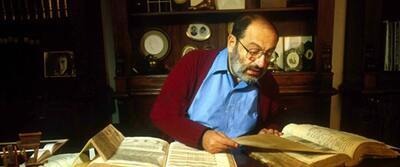
This lively and engaging documentary could just as well be titled “The Labyrinths of Umberto Eco.” The Italian scholar, essayist, novelist, lecturer, and polymath, who died in 2016 at the age of 84, owned not just a prodigious number of books, many of them antiquarian oddities; he absorbed over his lifetime a repository of knowledge that led down many corridors and around corners and snaky paths, allowing him to make astonishing and sometimes disquieting cultural connections. What he did was called semiotics—and the practice is just as crucial to his popular fictions The Name of the Rose and Foucault’s Pendulum as it is in his academic work. Very often, the result of his enthusiastic investigations demonstrated the truth of the Biblical adage about there being no new thing under the sun. 

So you think Vladimir Nabokov’s novel Pale Fire, a “fake” poem followed by an addled “annotation” that adds up to a sardonic yet tragic narrative, is some kind of triumph of modernism? Well, yeah, it is, but in Eco’s collection, there’s an 18th-century book by Thémiseul de Saint-Hyacinthe called The Masterpiece of an Unknown, which is a long mock-commentary on a nonsense verse, written about by Eco in his book La Memoria Vegetal, which I think has yet to be fully translated into English, which is a shame. 

The movie, directed by Davide Ferrario, combines archival interview footage of the ever-lively Eco, contemporary scenes of his family and friendly scholars poring over his incredible volumes and their often macabre illustrations, and readings of Eco’s work by actors. These latter moments are sometimes staged in a style that gets a little cute (complete with animation that gets a little cute), but they convey, to some extent, the breadth of Eco’s thought. These components are pillowed by beautiful shots of notable libraries the world over, one so futuristic in design that I doubted it was real, but the end credits confirm it is. There’s not much Eco Origin Story here; he tells a funny story about how as a student, he entered an arrangement with a theater manager to see plays cheap or free if he and his friends applauded rousingly enough, then recalls that he always had to leave before the last act, so he spent many years, for instance, not knowing “what happened to Oedipus.”

While the twists and turns of Eco’s mind, and his delight in what are called “fake books,” have a mind-blowing force to them, Eco himself is not blind to how manufactured knowledge can harm or kill. He calls our own brain the source of “organic memory.” Books, physical books, are vegetal memory. The silicon chips in our phones and computers represent mineral memory. A great memory isn’t always a good thing. Eco cites one of his (and everybody’s, really) favorite writers, Jorge Luis Borges, whose short story Funes, The Memorious is about a man who remembers everything. “And is an idiot,” Eco bluntly states. A good memory is a selective one. Hence, according to Eco, the Internet is “the encyclopedia, according to Funes.” 

Later, he muses that it is only in fiction that we encounter irrefutable truths. To this day, some people insist that the world is flat, and yet, Eco wryly notes, nobody questions that Clark Kent is secretly Superman. After the screening of the movie, I found Eco’s pronouncement borne out as I lunched at a well-known West Village pizza joint. Some guy came in with his kids and said loudly, “This is where Spider-Man works,” for indeed, the joint, albeit at a slightly different location, is where Tobey Maguire has a delivery job in the first Sam Raimi Spider-Man picture. 

Because this documentary intends to celebrate Eco’s life, work, and books, it doesn’t follow through on the darker currents that the work uncovered. It’s funny when Eco compares himself to The Da Vinci Code author Dan Brown and says, “He and I read the same books; only he believed them.” It’s not so funny when Eco speaks of the anti-Semitic forgery of The Protocols of the Elders of Zion. For as much as Eco saw how the written word could elasticize reality, he invariably spoke up for that reality while delighting in some ways that literature could distort and codify it. His theorizing on whether Sir Francis Bacon wrote Shakespeare’s works is a hilarious debunking that some souls might not actually see as a debunking. The best way to explore Eco’s world is via his actual body of work, and this picture made me want to revisit some of his literary labyrinths immediately. 

Now playing in theaters. 

Nimona 0

Nimona

A few compelling emotions and themes are suggested but rarely well expressed in “Nimona,” a sometimes cute but mostly hyper and overextended animated sci-fi fantasy about the title teenage shapeshifter and her disillusioned (and very literal) knight in shining armor. Overstuffed with Pinterest-ready details and set in the distant future, “Nimona” follows the unlikely duo of the title character (Chloe Grace Moretz), a bubbly, post-manic pixie dream girl, and Ballister Boldheart (Riz Ahmed), a disgraced “medieval”-style knight of some unnamed realm who must defend himself after he’s framed for murdering Queen Valerin (Lorraine Toussaint). 

“Nimona” feels more like a dramatized checklist of stylistic tics and emotional beats from both Pixar and Dreamworks’ animation studios’ greatest hits. There’s some lightly likable dad-friendly puns, sight gags, and a bunch of angsty declaiming about questioning authority, being true to yourself, and other bumper-stick-ready slogans. 

“Nimona” also features a bunch of post-post-punk anthems and punk-adjacent music of variable quality, including at least one Metric song (“Gold Guns Girls”) and some guitar riffs by ex-Sex Pistol Steve Jones. The characters, whose designs were partly modeled after the styles of the formative Disney background artist Eyvind Earle and the “minimal realist” illustrator Charley Harper, fly around the screen with enough keenly observed, fluid grace to remind you that many passionate animators made and put serious thought into the making of this movie. Unfortunately, several of the main characters’ facial expressions seem more like dutiful mimicry—“Nimona” was based on ND Stevenson’s graphic novel—than a convincing vehicle for the characters’ emotions. Their hearts are in the right place, but their mouths—and doe eyes, and glass-cutting jawlines—just pay lip service.

Case in point: While Nimona obviously matters to the plot and exhaustively detailed themes, she’s eventually prescribed with the sort of backstory that even Nimona, in an early scene, scoffs at. She laughs at Ballister’s paternal concern and also shields herself from easy typecasting by waving away his “small-minded questions.” The why of Nimona doesn’t matter, she says, but she eventually provides an origin story later on, which ostensibly endears her to us even more. She’s not a monster, as Ballister fearfully assumes, but a well-meaning misfit. Nimona is also the only friend that Ballister has after the hilt of his sword mysteriously fires a laser at the Queen and instantly kills her. 

You might have questions about that abrupt and surprisingly dark plot twist, but not much about “Nimona” is developed beyond precisely enunciated dialogue and well-designed animation. This isn’t a bad movie in the sense that it’s poorly made. But it often leaves something to be desired whenever the characters talk or muscle their way past the details that might make you want to root for Ballister and his proudly irreverent sidekick. For example, he’s got a concerned but fearful partner, Ambrosius Goldenloin (Eugene Lee Yang), a fellow knight who’s also different than Ballister in that he’s a descendant of the mythic hero Gloreth. Ballister, by contrast, is a commoner, which briefly makes him look like an underdog.

Ambrosius overcomes his wayward sense of duty as he chases after and inevitably tries to protect Ballister from the imperious Director (Frances Conroy), the kingdom’s snobby officiating protector. But why is Ambrosius, the kingdom’s favorite presumed favorite, not more hung up on Ballister’s relatively low upbringing? In other words, why is a movie so clearly trying to be about indoctrination—ignore your programming and trust your inner monster!—only so interested in its characters’ feelings? 

Nimona should, in theory, synthesize the movie’s two modes—leaden speeches and light-hearted chases—but doesn’t get to do much beyond defend her right to exist. Her in-your-face character will seem bubbly and spunky to some; others might find her a well-crafted but empty collection of third-hand quirks. She has all the right moves, as when she shape-shifts into various animals and repeatedly saves Ballister from capture and punishment. But when she talks, she sounds more like a tough-talking authorial sock puppet than a righteous adolescent. 

It’s hard to take a movie like “Nimona” seriously when it often tries to have it all ways. Moretz’s performance injects some appreciable irreverence into the movie’s stuffy anti-authority narrative, but Nimona’s creators go too far out of their way to applaud viewers for knowing that we’re watching a fractured fairy tale with rules that were made to be tweaked. Sounds great, but wouldn’t you rather watch a movie that’s more than a proof-of-concept showcase for its sometimes charming but mostly loud counterprogramming? Nimona is too calculating and savvy to be credible during her big heart-on-her-sleeve moments. She’s not a character; she’s whatever the scene needs her to be. Clever, sassy, goofy, wounded: “Nimona” is a big mood board.

On Netflix now.

Prisoner’s Daughter 0

Prisoner’s Daughter

When Max (Brian Cox) is released from prison early due to good behavior (and pancreatic cancer), he has nowhere to go. He still has contacts from his former life as a “heavy” in the Las Vegas underworld, but he has no desire to get back into all that. What he wants to do with the months he has left is reconnect with his daughter Maxine (Kate Beckinsale). Unfortunately, she wants nothing to do with him. She is the struggling single mom of son Ezra (Christopher Convery), piecing together random jobs so she can pay for Ezra’s epilepsy medication. Maxine doesn’t have the bandwidth for some delayed affectionate reunion with her father, who let her down in many ways. But she caves. Max moves in with Maxine and Ezra. “Prisoner’s Daughter,” directed by the talented Catherine Hardwicke, details the chaos and catharsis of what comes next.

With a script by Mark Bacci, “Prisoner’s Daughter” unfolds on fairly predictable lines: the slow melting of Maxine towards her father, the bond formed between grandfather and grandson, etc., and Brian Cox and Kate Beckinsale fill their thinly-drawn characters with backstory and fleshed-out complicated emotions. Every scene is loaded with baggage from the past. Ezra, bullied at school for his seizures, needs a father figure since his own dad is a drug-addicted loser named Tyler (Tyson Ritter), who plays in a “band” and lives in what he calls “an artists’ co-op” (really just a drug lair). Ezra wants to see his dad more. Tyler demands to be a part of his son’s life. Maxine knows the dangers and is willing to be the “bad guy,” refusing Tyler access. Max, ensconced in the small house, tries to intervene. Sometimes this goes well, other times, not so well.

Good scripts make you forget they are scripts. The script for “Prisoner’s Daughter” is quite talky and never takes wing. You can almost see the words on the page, despite the strong efforts of Beckinsale and Cox. Young Convery (very good in a similar role in “Pinball: The Man Who Saved the Game“) doesn’t fare as well. While Ezra is what you’d call “precocious,” his dialogue tilts into cutesy and sounds like it was written by someone who doesn’t know kids. The self-aware wisecracks grate, as does the calm ability to initiate difficult emotional conversations with adults, using therapeutic-speak, like a sit-com kid, circa 1987. It’s hard to get past this problem. If dialogue doesn’t sound real, nothing else has a chance to lift off. The film is betrayed by its final sequence, where Max takes matters into his own hands, a plot development from a different type of movie altogether. And so what could have been character-driven is plot-driven after all. “Prisoner’s Daughter” deflates.

If you only saw Las Vegas in film, you’d think it was solely made up of the neon strip and populated by gangsters, high-rollers, and showgirls. But Las Vegas is, of course, a place where normal people live. Similar to Alexander Payne’s “The Descendants,” taking place in a Hawaii rarely shown in film, “Prisoner’s Daughter” evokes Las Vegas in all its desert beauty and squalor (the “artists’ co-op” is the grungy stuff of nightmares). Maxine refers to her little house as a “dump,” but it has a backyard, and an unfinished garage, and she’s done her best to make it homey despite her limited means. 

The film’s best moment is a small one where Maxine is offered a job in a corporate laundromat. The awestruck look on Beckinsale’s face when “health insurance” is mentioned during the job interview is piercing and eloquent. Emotion doesn’t have to be conveyed with words. The moment is an indictment of the entire stinking system, where the ability to pay for your son’s crucial medication is tied to employment. It’s inhumane.

In “Lords of Dogtown,” Catherine Hardwicke did a very difficult thing: she captured the vibe of a specific scene. Subcultures are sometimes impenetrable to outsiders, and skateboarding/surfing in ’70s California was a real vibe, and Hardwicke nailed it. Hardwicke’s first film was “Thirteen,” a frightening look at two newly-teenage girls, hungry for experiences far beyond their years. Hardwicke approached the material with fearless intimacy. She also helmed the vibe-iest film of the 2000s, “Twilight,” with moody teenage love unfolding in the chilly light of the Pacific Northwest. “Twilight” is the best of the franchise, made fun of by those who pooh-pooh films championed by teenage girls. Meanwhile, teenage girls are cultural weathervanes, and Hardwicke caught that spirit. Teenage girls often spot things first and point the way. Hardwicke reveled in the spectacle of gloomy Kristen Stewart and glittery Robert Pattinson. She understood the subtext. These three films make up an extremely strong start.

“Prisoner’s Daughter” is tepid by comparison, but Hardwicke does her best to embed herself in the story, trying to catch the vibe. However, there is no vibe. She tries to create something that isn’t there to begin with. This is the job of any talented director, particularly with a script as clunky as this one. Hardwicke has a good eye, a good ear, and a sensitive feel for atmosphere. Hopefully her next project will give her the space to show what she can actually do.

Now playing in theaters. 

The Passengers of the Night 0

The Passengers of the Night

Dramatic occurrences crop up throughout “The Passengers of the Night”: a separation, a near-overdose, a workplace affair, a loss of virginity.

But director and co-writer Mikhaël Hers is just as interested in the rhythms of everyday life in 1980s Paris that provide the connective tissue between these events: kids riding bikes, a quiet conversation on a park bench, sneaking into a movie matinee, the Eiffel Tower in the pastel hues of dawn.

At the center of this low-key hang is Charlotte Gainsbourg as the newly single Elisabeth, effortlessly chic as always. She’s the middle-aged mother of two teenagers, and she’s searching for purpose and identity after her husband leaves her. Gainsbourg has long made herself vulnerable for the camera in her many film roles, but here she shows a tender fragility that steadily evolves into a warm, earthy confidence and even an unexpected sense of joy. It’s a lovely performance.

“The Passengers of the Night” takes place from 1981—with jubilation in the streets over the election of President François Mitterrand—through 1988. But a constant throughout the movie’s many life changes is the presence of the late-night radio show that gives the film its title. During the wee hours, people call in to share intimate, personal stories with the veteran star Emmanuelle Béart, formidable as ever, playing the host, Vanda.

Hers and cinematographer Sébastien Buchmann indicate Elisabeth’s loneliness —and the way the radio show gets her through the night—by framing her in silhouette, standing before the expansive windows of her high-rise, corner apartment, gazing at the city’s lights. It’s a gauzy but arresting image. So taken is she with Vanda’s program that she shows up at the station in the middle of the night and quickly accepts a low-paying job running the switchboard. You can feel how significant this human connection is; similarly, she’ll find contentedness years later with a daytime job at the library. Helping others becomes a calling, and watching her subtly blossom is a real pleasure. Is she exhausted from working double duty with weird hours? This film can’t be bothered with such realistic troubles.

The ease with which Elisabeth finds this job suggests early on how little interest Hers and co-writers Maud Ameline and Mariette Désert have in exploring conflict. Instead, they show us characters talking about books and films, listening to records, and smoking—always smoking. It is SO French. The younger of her two kids, 10th-grader Matthias (Quito Rayon Richter), wants to be a poet; her older sister Judith (Megan Northam) is a political activist. Everything is cool; there’s never any parental judgment or interference.

Even the film’s one potential source of tension or danger—Elisabeth’s invitation to a young vagabond to stay with the family for a little while—turns out to be a pleasant addition. Eighteen-year-old Talulah (Noée Abita) came into the radio station to tell her story of dropping out of school and living on the streets of Paris. Maybe it’s the mom in her, or maybe she relates to this sweet creature with her big, brown eyes and birdlike demeanor, but Elisabeth feels enough of an instant connection with this stranger to take her into her spare bedroom upstairs. Abita has a beguiling presence, reminiscent of a “Gia”-era Angelina Jolie. But even Talulah’s warning to Matthias not to fall in love with her—“I’m not a girl for you,” she says before beginning an ill-advised but inevitable fling with him—doesn’t result in the kind of melodrama most films would include.

Allowing us to luxuriate within the languid pacing of this slice-of-life story is actually refreshing during these big, noisy summer days. The period-specific production and costume design are spot on and give the film a lived-in feel (Gainsbourg wears many belted, cowl-neck sweaters, but nothing ever feels like a flashy ‘80s parody). Hers includes various pieces of archival footage from the era to give a feel for what Paris was like back then and even includes home movie-style images of these characters in the same boxy aspect ratio, a nice touch that enhances the feeling we’re watching a time capsule. And seeing Elisabeth find her voice within this realm—literally and metaphorically—is an understated delight. 

Now playing in theaters.